Seville | Snail Season

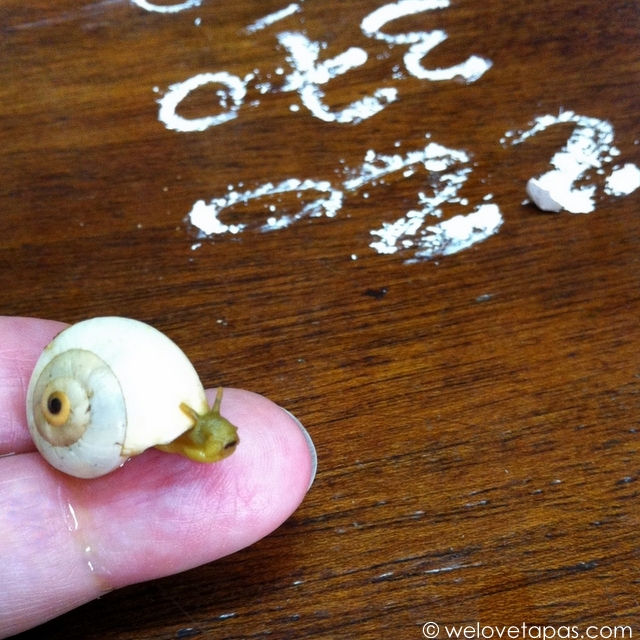
For most English speaking people at least the eating of snails is associated with the French and their escargots, but in fact snails are eaten all around the Mediterranean, and Spain, where they are known as caracoles (the small ones) and cabrillas (the big ones), is no exception. Snail season, which runs through mid-April to late-June, is eagerly awaited, and announced by many bars with a drawing of a snail and “hay caracoles!” (there are snails!).

Caracoles are prepared by cooking them in a broth, usually with garlic and black pepper, and the quality of the broth is generally accepted as central to the quality of the dish served to customers. Cabrillas tend to be cooked in a thicker tomato-based sauce. Bars have their own “secret” recipes, so if you want to enjoy some snails while you are in Seville, knowing where to go is essential. These are 5 of our favourites.


Casa Antonio – Bar Los Caracoles
Perez Galdos, 13
Tel: +34 954 213 172

A small family run bar just off the Plaza Alfalfa, Casa Antonio – Bar Los Caracoles is one of the best for snails served with a side of broth, and also specializes in great fish and seafood tapas.


Bodega La Mina
Cuesta del Rosario, 7
Tel: +34 954 214 092

Another small traditional bar near the centre where you can be assured of a warm welcome and a cold beer or glass of manzanilla. Also famous for its mojama (cured tuna) and chicharrones it’s a great place to start your tapeo.


Casa Ruperto
Santa Cecilia, 2
Tel: +34 954 086 694

Triana, the working class neighbourhood across the river, is famous for almost everything traditionally Sevillano – flamenco, bullfighters, seafood – and snails. Casa Ruperto is a no frills kind of a place but is justly renowned for its snails (also for its quail, but that’s another story).


Casa Diego
Alfarería, 5
Tel: +34 663 520 221

Also in Triana, not far from the market, Casa Diego serves up some great caracoles, which you can enjoy with a chilled manzanilla or a cold beer from their unique beer pump in the form of the nearby Santa Ana Church.


Bar Alfonso – El Rey de Los Caracoles
Santas Patronas, 5
Tel: +34 954 225 960

Alfonso Pérez was dubbed “The King of the Snails” in 1988 and his bar, now run by son Manuel, offers both caracoles and cabrales in season. Both are delicious and can be ordered to eat in or take-away.


Hola!

It’s all about the Pig

IMG_9081

As anyone who has been to Spain will already know, when it comes to food the pig holds a special place of affection in the hearts of the Spanish (if you can excuse a rather mixed metaphor). No one knows exactly how long this love affair has been going on, but it’s thought that domesticated pigs were first brought to the peninsula by the Phoenicians nearly three thousand years ago, though the native Iberians had no doubt been hunting the native wild boar for many centuries before that. Although always popular, the centrality of the pig in Spain was cemented in the late Middle Ages as the Christians wrested control from the Moors and the Jews, and the consumption of pork became something of a symbol of the new Christian Spain.

IMG_8821

At some point the boar and the domesticated pigs were crossbred, resulting in the Iberian peninsula’s very own special breed, the famous Iberian black-footed pig. They are raised mainly in the hill country of northwest Andalucia and Extramadura, on a specially maintained landscape called a dehesa, essentially grassland with groves of oak trees, and the pigs fatten by foraging on acorns (Spanish bellota). Although not numerically the majority of Spanish pigs, this is the breed which supplies the unique and highly prized Iberian pork and ham products.

IMG_9206

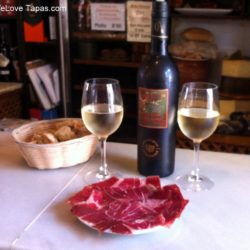
Most prized of all, of course, is the wonderful jamon Iberico Bellota. The combination of breed, free-range diet and the curing process make this the treat not to be missed. Succulent and full of flavour, it is arguably the best ham in the world, and for the full Spanish effect it should be accompanied by a glass of chilled manzanilla or fino. You should also try caña de lomo, a cured Iberian pork loin with a subtly different taste and texture.

IMG_8855

But it’s not all jamon. Traditionally, every part of the pig is used. Lean cuts such as presa or solomillo are normally grilled (solomillo is popular with a whisky sauce with lots of garlic and a hint of lemon that’s absolutely delicious). The slightly fattier pluma and secreto, as well as bacon, may be either grilled or fried. But it doesn’t stop there. Tender stewed pork cheeks (carrillada) seem to be one of Spain’s best kept culinary secrets. So too is morcilla, or blood sausage. The idea can be off-putting to some, but in fact it’s very tasty, and very versatile.

But when I say every part of the pig is used, I mean every part. From tripes (the secret’s in the sauce) to feet and from snout to tail, it’s all part of somebody’s favourite dish. I’ve tried pretty well all of them at one time or another, and haven’t found one that I don’t like. How many are you going to try while you’re here?

IMG_8778

Seville Cycling & Tapas Tour

tapas cycling

We Love Tapas and ELECMOVE created a very special collaboration a few months ago – the Cycle & Tapas Tour –  offering an introduction to Seville on electric bikes followed by a delicious Traditional Tapas Tour. But it was only recently that the WLT Team got together with ELECMOVE to experience the electric bike tour themselves. And the ELECMOVE team also got to sample tasty tapas with us. Really, a match made in heaven.

cycling tapas (1)

We met up at ELECMOVE at 10.00 am and our cheerful guide Marie immediately set about getting us set up with out bikes, adjusting seat heights, checking tire pressure, snapping on baskets for those who wanted it. And then we got a quick lesson on how electric bikes work. Pretty easy really.

cycling tapas (2)

The route for the Introduction to Seville tour is at least 90% on cycle paths, stopping off at places of interest.

cycling tapas (3)

Marie kept asking if we wanted to stop for photos, so…

cycling tapas (4)

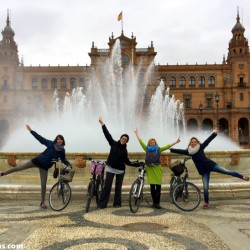
Here we are in front of the Royal Tabacco Factory where Carmen once rolled cigars on her gypsy thighs…

cycling tapas (5)

The WLT chicas replicating the poet Becquer’s three phases of love.

cycling tapas (6)

Marie explains Mudejar architecture in Parque María Luísa

IMG_6903Team WLT Sevilla: Delia, Sara, Ania & Aldara

cycling tapas (7)Team ELECMOVE: guides Marie & Juan, owner Sofia

CYCLING & TAPAS TOUR

Callejeando Food Fest in Sevilla

What does foodie heaven look like? We bet it looks something like this…

sunset

It all happened this past weekend in Seville and of course we were there, eating and drinking non stop! There were 19 different food trucks from all over Spain with their delicious creations. To start we tried out our own local food truck, La Cayejera, which can usually be found under Triana bridge or at Torre Pelli.

callejeando (6)

The food truck concept was developed in USA but though the idea has been imported from the states, everything else is local, like this amazing Retinto beef with Payoyo cheese from Cadiz, the basic ingredients for the Brilla Bombilla hamburger.

callejeando (7)

In Spain we know all about meat, which is why Ox&Roll people were more than prepared to raise a very special one here: Wagyu. You may have heard about Kobe but this is the 100% real one, the genuine article guaranteed by Japanese organizations. They take great care of the animals and of the whole production process, and the result is the tastiest steak we have ever tried.

callejeando (3)

Culinary fusions are another important element in food trucks recipies, and Tabe Gozo is a perfect example. They were travelling around when came up with the idea of a basque-japanese mix for their project. They even make their own bread.

callejeando (2)

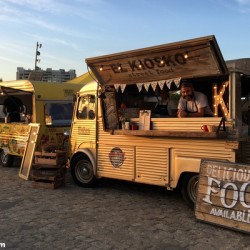
El Kiosko came with one of their three food trucks and created a special crispy chicken and nachos burger just for this event! BoKarte is its name and here you can learn how to make it: Bokarte de Pollo

callejeando (8)

These guys spent 15 hours driving to get here from Barcelona, but it was worth the ride because they surprised everybody with their chips nest, as you can see by the long line of hungry customers. La Internacional is an example of how passionate one must be to start this adventure and how successful it can be.

callejeando (4)

On a recent national TV show called Cocineros al Volante food trucks had to prove their value, and we have the winner here: Javier Brichetto. As you can imagine, we were already really full by then but he had created a burger good enough to be considered the best among so many others…so we had to try it!

callejeando (5)

Since nature gave us a separated stomach for dessert we could still enjoy Manu Jara’s surprising creations. He prepares cookies, truffles, cakes, and of course his signature choco-burger.

The event has been such a success that they are planning to do it every three months so we will keep an eye out for this Festival, in the hope that there will be more food trucks coming!

Jerez | Ruta de Tabancos

tabancos (1)

Jerez de la Frontera is a short train ride away from Seville and is, of course, most famous for its local wine – sherry. While you are there you should not only visit one of the city’s many bodegas, but also do at least part of the “Ruta de Tabancos“. Tabancos are a type of bar or tavern that is typical of Jerez de la Frontera, combining the social function of a bar and the commercial function of a “despacho de vinos”, or wine shop, selling wine from the cask to take away or for consumption on the premises. The earliest known use of the word is in Cervantes (1547-1616), of Don Quixote fame, and may be a combination of the words “estanco” (a shop selling government controlled products) and “tabaco”. We don’t really know what these early tabancos may have been like, but the word doesn’t seem to have caught on until the early 20th century, when it began to be used in its modern sense.

tabancos (4)Ruta de Tabancos map by Tabancora

After a period of decline in the late 20th century tabancos have had a resurgence, and now include some more modern influences to complement the traditional. The Ruta was developed by Tabancora (promoted by the City Council and the Sherry Academy) to help maintain the traditions of the tabanco, and several times a year there are special Ruta events. Recently –  in the spirit of Serious Research – the We Love Tapas Team undertook the gruelling 😉 task of visiting each bar on the Ruta. These are our findings…

tabancos

Tabanco El Pasaje
Santa Maria, 8
Tel: +34 956 333 359
Website

El Pasaje was officially founded in 1925 by Don José González Navarro, which makes it the oldest tabanco still operating in Jerez, but even before this the premises had functioned as a small grocer’s, and later as a flamenco club for the waiters of Jerez. Flamenco is still an important part of the ambiance, with live flamenco shows on Friday and Saturday evenings, and sometimes impromptu performances at other times. The name derives from the fact that it has two entrances, so the bar itself is a “passage”. Sherries are by Bodega Sierra Maestro, and some others are available too. A very traditional and fun atmosphere, and light tapas snacks are also available.

tabancos (5)

Tabanco San Pablo
San Pablo, 12
Tel: +34 956 338 436
Website

Another very traditional tabanco founded in 1934 by Manuel Muñoz Peña, and still run by his descendants. It still has the original wooden counter and sherry casks (sherries by Gonzalez Byass), and you can try some typical Andaluz tapas, such as jamón and pringá, with your drink. There is also a pleasant terrace outside, though it’s all self-service here.

tabancos (9)

Tabanco La Pandilla
Los Valientes, 14
Tel +34 956 343 248
Website

La Pandilla first opened its doors in 1936. Closed in 1979 during the decline of tabancos, it reopened again in 2013, and still preserves a lot of the original decor and ambiance, including the beautiful wood beam ceiling and old posters and pictures on the walls. The original Sanchez Romate sherries are still served, along with filled rolls, cured meats, cheeses and marinades.

tabanco

Tabanco Plateros
Francos, 1
Tel: +34 665 213 415
Website

Plateros has a terrific location on the corner of the square of the same name with a pleasant terrace outside, though the bar itself is tiny. It specialises in sherries from some of the smaller bodegas and cooperatives, and local cured meats and cheeses. Super friendly staff and great “local” atmosphere.

tabancos (3)

Tabanco El Guitarrón de San Pedro
Bizcocheros, 16
Tel +34 649 656 918
Website

Opened in 2012 by Jose Antonio Reguera and Mireia Rodríguez, this is a relatively modern and “upmarket” tabanco, but has all the essentials of the genre. There’s a full range of sherries, as well as cured meats, cheeses and preserves (and one of the best tortilla de patatas I’ve ever had). They also do tastings, and events to educate people about sherry, and there are regular flamenco performances.

tabancos (7)

Tabanco Las Bandarillas
Caballeros, 12
Tel: +34 619 006 988
Website

Also opened in 2012, by Fernando Lobato and Lucas Soto, Las Bandarillas replaced an existing bar-restaurant of the same name. As well as sherry and vermouth from the barrel there are preserves and delicatessen products to eat on the premises or take away, and a good selection of hot tapas. In fact, it has more of a tapas bar than tabanco feel to it, but still a fun and lively place to stop.

tabancos (12)

Tabanco La Bodeguita
Arcos, 5
Tel: +34 607 892 221

Opened in 1947 by Rafael Ramirez Pérez, and now run by Fernando Lobato, La Bodeguita has been described as more Jerezano than Jerez itself. A small counter at the back serves for the consumption of an ample selection of  sherries drawn straight from the barrel. An even bigger selection is available in bottles ranged along the shelves to one side. Nothing can really prepare you for La Bodeguita, just go and see for yourself. We loved the welcoming and convivial atmosphere.

tabancos (10)

Mushroom Season

amaritasamanitas cesáreas

Autumn is here, even in Spain, and among the things this season brings with it are wild mushrooms. Country people have always gathered mushrooms for the pot at this time of year, but in Spain in recent decades harvesting mushrooms has become a popular weekend pastime, taking advantage of the temperate weather to get out and about in the woods and fields. It goes without saying, of course, that you should only do this if you are, or are with, an expert in the identification of mushrooms, as although there are only about 50 toxic species out of more than 2,000, half a dozen of these are deadly, and some are easily mistaken for those tasty specimens you’re looking for.

modestoseasonal mushroom selection at Restaurante Modesto

Although in the English language the term mushrooms is reserved for edible varieties, the rest being usually described as toadstools, they are all fungi, neither animal nor plant, but an entire separate kingdom of organisms, of which the visible mushroom or toadstool is only the fruiting body of a network of filaments that draw their sustenance from living or decaying matter. Remarkably, some of the largest living creatures on earth are actually fungi.

wild mushroomswild mushrooms at Mercado de la Encarnación

Many mushrooms are grown commercially, and are available all year round, but in the autumn a wide variety of wild mushrooms, broadly known as setas in Spanish, though this word is also used for certain specific varieties, too (the common, mainly commercially produced button mushrooms are champiñones), make their appearance in bars, restaurants and markets. Each of them has its own distinct taste and texture, and its own preferred uses.

amaritas azoteagrilled amanitas cesáreas with pesto and parmesan at La Azotea
Boletus (also known as porcini) is one of the most prized. It has a large brown cap that can grow up to 35cm in diameter, though smaller ones are preferred. It has a meaty taste and creamy texture. Most used in soups, pastas and risotto, and is also great in croquettes.

Amanitas cesáreas (Caesar’s mushroom) was a favourite of the Roman emperors. It has a distinctive orange cap and yellow gills and a delicate texture.

Setas, or oyster mushrooms, come in a variety of species, all wide, flat gilled mushrooms, often without a stem. They are normally torn or broken up rather than sliced, and are particularly good for stir fry or sauté.

Níscalo, also known as saffron milk-cap or red pine because of its colour, is often fried whole with garlic and parsley.

Gurumelo is one of the most prized of all wild mushrooms, and is unique to southwestern Spain. Claimed to improve almost any dish, it can be braised, or added to stews or omelettes.

Sevilla | Abacerías

Updated: July 1, 2016

You may notice, or may have already noticed, as you make your way from bar to bar in search of tapas and a drink, that the word abacería (often antigua abacería) appears in some of the names in a way that suggests a particular meaning. But what meaning?

abaceria

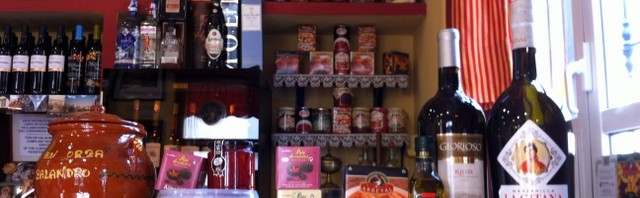
On closer inspection you may notice that as well as being bars, these abacerias are also small shops, selling a variety of foodstuffs, but especially delicatessen (hams and cheeses etc), beans, herbs and spices, and speciality items in tins and jars. In fact, these abacerías (and not all abacerías have the word in the name), were shops first, and shops with a bar later, although the presence of a bar is what distinguishes them from the other type of small grocer’s, the tienda de ultramarinos (literally shop of beyond the sea, originally specialising in products from the New World). The word abacería is Arabic, meaning something like “place of supplies”, and nowadays offer the opportunity to sample anything you’ve bought in the shop while still on the premises. By the mid 20th century abacerias had almost disappeared, but over the last few decades there has been a revival, and both “traditional” and “modern” versions are now very popular.

I love these little treasure troves of culinary delights, where you never know quite what you may find. There’s some nostalgia too; a lot of them have a look and atmosphere of little shops that I remember from my childhood, but transported to a different country and almost magically reinvented. These are some of my favourites, and well worth seeking out for that very special Sevilla experience.

casa moreno

Casa Moreno is one of my favourite places in Sevilla. A tiny shop in front with a little bar hidden away at the back serving mostly montaditos (toasted buns) with delicious meat and cheese fillings. Great atmosphere that’s old fashioned in just the right way.
Casa Moreno
Gamazo
7 Arenal

abaceria san lorenzo

La Antigua Abaceria de San Lorenzo isn’t actually that antigua, though it certainly looks the part. Hidden away in a residential neighbourhood it’s obviously a locals bar, cosy and intimate with everybody on first name terms.
La Antigua Abacería de San Lorenzo
Teodosio 53
San Lorenzo

antigua abaceria triana

La Antigua Abaceria in Triana has something of the feel of a country pub, and is a great little place to stop for a beer and snacks. It’s recently been extended into a second premises next door, but still has the same friendly atmosphere.
La Antigua Abacería
Pureza 12
Triana

la almadraba

La Almadraba is part of a modernising trend at Seville’s oldest market in Calle Feria. As the name suggests it’s all about the tuna, with quality products from top brands such as Herpac.  Don’t miss the mojama (cured tuna). Delicious.
La Almadraba
Feria Market

salsamento
Salsamento is a brand new abacería in the revitalised Regina neighbourhood behind the Metropol Parasol that has succeeded in combining the traditional spirit of the abacería with a totally modern light and clean interior design. There’s a nice mix of cheeses and charcuterie with simple tapas and a nicely displayed range of speciality tinned goods.
Salsamento
Jerónimo Hernández 19
Centro / Regina

federico flores

Flores Jamon y Vinos in Puerta Triana, is a modern, upmarket version of abaceria. Specialising in top quality jamon, but with plenty of other goodies to excite. Eat here or take away, with ham and other cured meats cut to order or available vacuum packed.
Flores Jamones & Vinos
San Pablo 24
Centro/Arenal

Photos courtesy of Azahar Sevilla

Postcards from Andalucía | Antequera

We love Andalucia! And to start off our series of “postcards” from our travels around the most southern region of Spain – where we live! – we’d like to introduce you to one of our favourite places, Antequera. Andalucía is justly famous for its great classical and mediaeval cities – Seville, Málaga, Cádiz, Córdoba and Granada – but its riches are by no means confined to these. Beauty, culture (and good food) can be found almost everywhere you look in this part of Spain, and we hope our postcard posts will encourage you to explore further afield, and perhaps enjoy some things that not everyone gets to experience.

antequera (1)

Antequera, in the province of Málaga, is officially the centre of Andalucia, and has a plaque and small pillar in the Plaza San Sebastian to mark the spot. It’s easy to reach by train or car from Córdoba, Granada, Málaga or Sevilla, and as well as its picturesque small town charm it boasts a number of monuments that reflect its complex and fascinating history (including the Alcazaba fortress on a hill on the southern edge of town), and a number of unique attractions nearby.

Just outside the town, and easily visible from the Alcazaba Hill, is the strangely shaped mountain of Peña de Los Enamorados (Lovers’ Rock) A poem by Robert Southey reflects the story of two young lovers from rival Moorish clans who are said to have thrown themselves to their deaths from the top while being pursued by the girl’s father.

antequera (4)view of Antequera from the Alcazaba

A little way to the north are the burial mounds of Viera and Menga, which are more than 4,000 years old, and among the largest in Europe. Further afield, but worth considering if you’re here for more than a day trip, are the nature reserve of El Torcal, famous for its bizarre limestone rock formations, the gorge of Los Gaitanes and the King’s Way, and the Fuente La Piedra, a saltwater lagoon that is a major breeding place for the pink flamingo. Also worth a visit is the wolf sanctuary of Parque Lobo.

antequera (6)The Alcazaba was built by the Moors in the 13th century after the Christian kings conquered Cordoba, and finally fell to the future Ferdinand I of Aragon in 1410. It’s well worth a visit, with an excellent audio guide to the castle, and panoramic views of the town and surrounding countryside (look out for the golden angel on top of the San Sebastian church tower). Antequera is also famous for its large number of churches, convents and palaces (it’s sometimes called the city of churches), mostly built in the period of prosperity after the discovery of the New World, and an important museum which you can find in the Nájera Palace in the Coso Viejo.

But now let’s talk about what you’ve all been waiting for … the food! Antequera is the home of the mollete, a special type of soft bread bun, typically served for breakfast. Though the debate still rages about whether to toast the mollete before or after cutting it open (we agree with our friends @PolloyEnsalada that the latter is preferable).

antequera (2)breakfast mollete with olive oil, tomato and jamón serrano

Another thing we liked about breakfast in Antequera is that you can order their crispy and delicious version of churros by the ring…

antequera (3)two rings of churros please!

Porra, a thick cold tomato soup similar to salmorejo, is also an Antequera staple. There are a lot of good bars where you can sample this, and other local dishes, but be sure to pay a visit to Arte de Cozina, our favourite restaurant in the town, which specialises in old traditional, often forgotten, local recipes (chef Charo Carmona will even give you the recipes to take home with you). Opt for either the tapas bar or restaurant and enjoy some of the best traditional food in Andalucía.

antequera (5)three types of porra: tomato, blanca and orange
Have you visited Antequera? Did you love it as much as we do?

Tapas 101

tapas avatarWhat better way to start our new blog than to tell you something about what we love? We’re talking tapas, of course – those nifty little snacks that you buy to go along with your drink, and which can rapidly add up to a complete meal.

But what exactly is a tapa? What’s so special about them? And why are there so many tapas bars, and what should you expect when you go into one?

A tapa is, literally, a lid or a cover, and the name derives from the practice of landlords serving a piece of bread, ham or cheese to put over the drinks to keep out the dust and flies. This is rarely needed now, though if the bar you’re in is really crowded the top of your glass may still be the only place to put your plate!

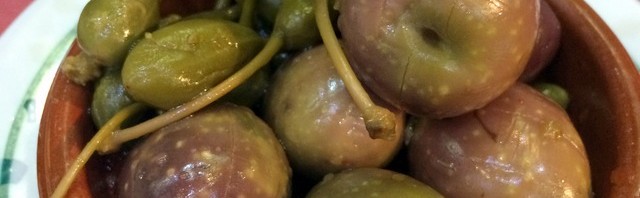
olivesBut there’s more to tapas than just food, of course. In Andalucía tapas is part of the social culture, and it’s something that every visitor to Spain should experience, preferably in the form of a “tapeo”, which is going from bar to bar for drinks and tapas (one of the reasons there are so many of them).

Tapas are typically informal. Food is often shared between friends or family, and because the bars are often busy they may be eaten standing at the bar or at small tables, or even shelves or upturned barrels, and the atmosphere is noisy and convivial. The style of the different bars can be quite varied, but posters for those other Sevillano traditions, bullfighting, flamenco, Semana Santa (Holy Week) and Ferias are common. So too are the cured hams hanging from the rafters, picos (little breadsticks), and paper napkins seemingly specially designed not to absorb any spillages. Bars that are full of locals will usually be the best, but the only ways to be sure are trustworthy recommendation and trial and error.

jamonesBefore ordering check whether tapas are available at the tables or outside (sometimes you have to order raciones – full size plates), or only at the bar. Once seated (or stooded, if you’re at the bar), don’t order everything at once – it may all come at once, get cold, or just be more than you need – just one or two tapas each to start, and more as you go. Expect to pay around €2-3 for a tapa, though it can go as high as €6, especially in “gastrobars”. The barman will usually keep a tab for you, which is paid at the end, but if you’re eating outside you may have to “pay as you go”. There aren’t any rules about tipping, but we generally leave 10%, or just some change if we’re at the bar.

Kitchens are generally open from around 1 pm to 4 pm, and again from 8 pm to midnight, though the bars may stay open during the afternoon for drinks, coffee and cold snacks. Many bars are also open for breakfast, serving mainly coffee and toast.

la cuentaSo don’t be shy, or intimidated by the noise and chatter. Just get stuck in.