It’s all about the Pig

IMG_9081

As anyone who has been to Spain will already know, when it comes to food the pig holds a special place of affection in the hearts of the Spanish (if you can excuse a rather mixed metaphor). No one knows exactly how long this love affair has been going on, but it’s thought that domesticated pigs were first brought to the peninsula by the Phoenicians nearly three thousand years ago, though the native Iberians had no doubt been hunting the native wild boar for many centuries before that. Although always popular, the centrality of the pig in Spain was cemented in the late Middle Ages as the Christians wrested control from the Moors and the Jews, and the consumption of pork became something of a symbol of the new Christian Spain.

IMG_8821

At some point the boar and the domesticated pigs were crossbred, resulting in the Iberian peninsula’s very own special breed, the famous Iberian black-footed pig. They are raised mainly in the hill country of northwest Andalucia and Extramadura, on a specially maintained landscape called a dehesa, essentially grassland with groves of oak trees, and the pigs fatten by foraging on acorns (Spanish bellota). Although not numerically the majority of Spanish pigs, this is the breed which supplies the unique and highly prized Iberian pork and ham products.

IMG_9206

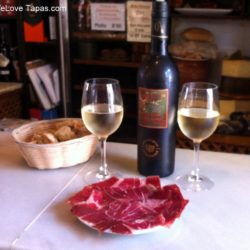
Most prized of all, of course, is the wonderful jamon Iberico Bellota. The combination of breed, free-range diet and the curing process make this the treat not to be missed. Succulent and full of flavour, it is arguably the best ham in the world, and for the full Spanish effect it should be accompanied by a glass of chilled manzanilla or fino. You should also try caña de lomo, a cured Iberian pork loin with a subtly different taste and texture.

IMG_8855

But it’s not all jamon. Traditionally, every part of the pig is used. Lean cuts such as presa or solomillo are normally grilled (solomillo is popular with a whisky sauce with lots of garlic and a hint of lemon that’s absolutely delicious). The slightly fattier pluma and secreto, as well as bacon, may be either grilled or fried. But it doesn’t stop there. Tender stewed pork cheeks (carrillada) seem to be one of Spain’s best kept culinary secrets. So too is morcilla, or blood sausage. The idea can be off-putting to some, but in fact it’s very tasty, and very versatile.

But when I say every part of the pig is used, I mean every part. From tripes (the secret’s in the sauce) to feet and from snout to tail, it’s all part of somebody’s favourite dish. I’ve tried pretty well all of them at one time or another, and haven’t found one that I don’t like. How many are you going to try while you’re here?

IMG_8778

Mushroom Season

amaritasamanitas cesáreas

Autumn is here, even in Spain, and among the things this season brings with it are wild mushrooms. Country people have always gathered mushrooms for the pot at this time of year, but in Spain in recent decades harvesting mushrooms has become a popular weekend pastime, taking advantage of the temperate weather to get out and about in the woods and fields. It goes without saying, of course, that you should only do this if you are, or are with, an expert in the identification of mushrooms, as although there are only about 50 toxic species out of more than 2,000, half a dozen of these are deadly, and some are easily mistaken for those tasty specimens you’re looking for.

modestoseasonal mushroom selection at Restaurante Modesto

Although in the English language the term mushrooms is reserved for edible varieties, the rest being usually described as toadstools, they are all fungi, neither animal nor plant, but an entire separate kingdom of organisms, of which the visible mushroom or toadstool is only the fruiting body of a network of filaments that draw their sustenance from living or decaying matter. Remarkably, some of the largest living creatures on earth are actually fungi.

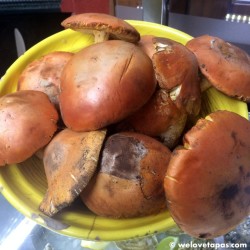
wild mushroomswild mushrooms at Mercado de la Encarnación

Many mushrooms are grown commercially, and are available all year round, but in the autumn a wide variety of wild mushrooms, broadly known as setas in Spanish, though this word is also used for certain specific varieties, too (the common, mainly commercially produced button mushrooms are champiñones), make their appearance in bars, restaurants and markets. Each of them has its own distinct taste and texture, and its own preferred uses.

amaritas azoteagrilled amanitas cesáreas with pesto and parmesan at La Azotea
Boletus (also known as porcini) is one of the most prized. It has a large brown cap that can grow up to 35cm in diameter, though smaller ones are preferred. It has a meaty taste and creamy texture. Most used in soups, pastas and risotto, and is also great in croquettes.

Amanitas cesáreas (Caesar’s mushroom) was a favourite of the Roman emperors. It has a distinctive orange cap and yellow gills and a delicate texture.

Setas, or oyster mushrooms, come in a variety of species, all wide, flat gilled mushrooms, often without a stem. They are normally torn or broken up rather than sliced, and are particularly good for stir fry or sauté.

Níscalo, also known as saffron milk-cap or red pine because of its colour, is often fried whole with garlic and parsley.

Gurumelo is one of the most prized of all wild mushrooms, and is unique to southwestern Spain. Claimed to improve almost any dish, it can be braised, or added to stews or omelettes.

Sevilla | Abacerías

Updated: July 1, 2016

You may notice, or may have already noticed, as you make your way from bar to bar in search of tapas and a drink, that the word abacería (often antigua abacería) appears in some of the names in a way that suggests a particular meaning. But what meaning?

abaceria

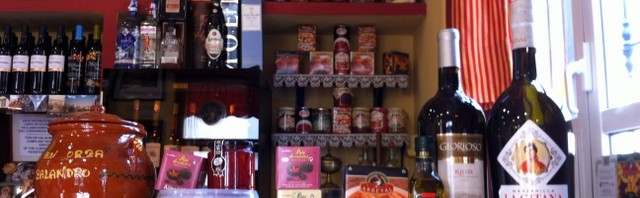
On closer inspection you may notice that as well as being bars, these abacerias are also small shops, selling a variety of foodstuffs, but especially delicatessen (hams and cheeses etc), beans, herbs and spices, and speciality items in tins and jars. In fact, these abacerías (and not all abacerías have the word in the name), were shops first, and shops with a bar later, although the presence of a bar is what distinguishes them from the other type of small grocer’s, the tienda de ultramarinos (literally shop of beyond the sea, originally specialising in products from the New World). The word abacería is Arabic, meaning something like “place of supplies”, and nowadays offer the opportunity to sample anything you’ve bought in the shop while still on the premises. By the mid 20th century abacerias had almost disappeared, but over the last few decades there has been a revival, and both “traditional” and “modern” versions are now very popular.

I love these little treasure troves of culinary delights, where you never know quite what you may find. There’s some nostalgia too; a lot of them have a look and atmosphere of little shops that I remember from my childhood, but transported to a different country and almost magically reinvented. These are some of my favourites, and well worth seeking out for that very special Sevilla experience.

casa moreno

Casa Moreno is one of my favourite places in Sevilla. A tiny shop in front with a little bar hidden away at the back serving mostly montaditos (toasted buns) with delicious meat and cheese fillings. Great atmosphere that’s old fashioned in just the right way.
Casa Moreno
Gamazo
7 Arenal

abaceria san lorenzo

La Antigua Abaceria de San Lorenzo isn’t actually that antigua, though it certainly looks the part. Hidden away in a residential neighbourhood it’s obviously a locals bar, cosy and intimate with everybody on first name terms.
La Antigua Abacería de San Lorenzo
Teodosio 53
San Lorenzo

antigua abaceria triana

La Antigua Abaceria in Triana has something of the feel of a country pub, and is a great little place to stop for a beer and snacks. It’s recently been extended into a second premises next door, but still has the same friendly atmosphere.
La Antigua Abacería
Pureza 12
Triana

la almadraba

La Almadraba is part of a modernising trend at Seville’s oldest market in Calle Feria. As the name suggests it’s all about the tuna, with quality products from top brands such as Herpac.  Don’t miss the mojama (cured tuna). Delicious.
La Almadraba
Feria Market

salsamento
Salsamento is a brand new abacería in the revitalised Regina neighbourhood behind the Metropol Parasol that has succeeded in combining the traditional spirit of the abacería with a totally modern light and clean interior design. There’s a nice mix of cheeses and charcuterie with simple tapas and a nicely displayed range of speciality tinned goods.
Salsamento
Jerónimo Hernández 19
Centro / Regina

federico flores

Flores Jamon y Vinos in Puerta Triana, is a modern, upmarket version of abaceria. Specialising in top quality jamon, but with plenty of other goodies to excite. Eat here or take away, with ham and other cured meats cut to order or available vacuum packed.
Flores Jamones & Vinos
San Pablo 24
Centro/Arenal

Photos courtesy of Azahar Sevilla

Spanish Cold Soups

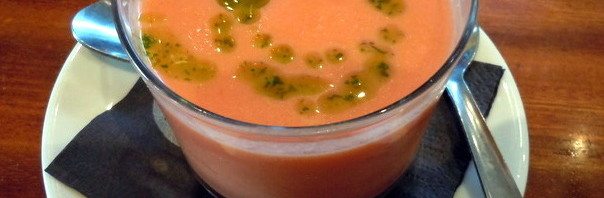
Light, cool and refreshing in the hot summer weather, gazpacho, the cold tomato soup of southern Spain, is nowadays well-known all over the world. It’s one of a family of tomato based cold soups that includes salmorejo and porra, as well as other local varieties, but the origins of these dishes actually goes back to before tomatoes and peppers came to Spain from the New World, and even before the other common Spanish cold soup ajoblanco, made with garlic and almonds (which came to Spain with the Moors).

gazpachogazpacho

In early mediaeval times the Spanish are known to have made a soup of water, dry bread, olive oil, garlic and vinegar, which probably went back to Roman times, as all of these were important elements of Roman cuisine. Leftover vegetables and, if you were lucky, meat or fish, were added to the mixture, which was mashed up to make a paste. In Moorish times peeled, blanched crushed almonds became a major ingredient, resulting in a thick, creamy white soup that was an early form of today’s ajoblanco, still strongly associated with the last of their strongholds in Granada and Malaga.

ajo blancoajoblanco

Tomatoes (and peppers) began to appear in cold soups after these arrived from the Americas in the early 16th century. Because Seville had the monopoly of the trade, and tomatoes thrived in the soil and climate of the Guadalquivir valley (Los Palacios tomatoes are almost legendary for their taste and size), these new tomato based soups first developed in this part of Andalucia, and were not well known or highly regarded elsewhere until the 19th century.

salmorejosalmorejo

The terms used for the different varieties depend on how thick the soup is, and the extra ingredients that are used, and are commonly associated with different localities. Gazpacho, from Seville, normally adds more vegetable ingredients, particularly cucumber, peppers and onions, but less bread and olive oil, which results in a thinner mix that is usually drunk rather than spooned. It’s often garnished with croutons and chopped cucumber and pepper.

Salmorejo, the Cordobes tomato soup has more olive oil and breadcrumbs than gazpacho, and is thicker and creamier. It’s often used as a sauce (one of my favourite tapas is a carpaccio of salt cod topped with salmorejo), and may have a wide range of extra ingredients, such as beetroot, melon and avocados. In Úbeda I even came across a variety for the gluten intolerant that replaced bread with green apples – and very tasty it was too. The traditional garnish is a quartered hard-boiled egg and chopped ham.

porraporra

Porra (literally “club”, and I’ve seen it translated that way on a menu) is from the central part of Andalucia around Antequera, and is probably named for the mortar and pestle used to grind up the ingredients. With more breadcrumbs and red and green peppers it’s the thickest of all. Tuna is a popular garnish.