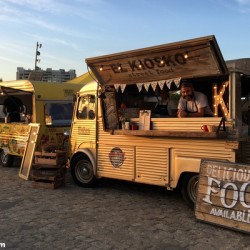
Callejeando Food Fest in Sevilla

What does foodie heaven look like? We bet it looks something like this…

sunset

It all happened this past weekend in Seville and of course we were there, eating and drinking non stop! There were 19 different food trucks from all over Spain with their delicious creations. To start we tried out our own local food truck, La Cayejera, which can usually be found under Triana bridge or at Torre Pelli.

callejeando (6)

The food truck concept was developed in USA but though the idea has been imported from the states, everything else is local, like this amazing Retinto beef with Payoyo cheese from Cadiz, the basic ingredients for the Brilla Bombilla hamburger.

callejeando (7)

In Spain we know all about meat, which is why Ox&Roll people were more than prepared to raise a very special one here: Wagyu. You may have heard about Kobe but this is the 100% real one, the genuine article guaranteed by Japanese organizations. They take great care of the animals and of the whole production process, and the result is the tastiest steak we have ever tried.

callejeando (3)

Culinary fusions are another important element in food trucks recipies, and Tabe Gozo is a perfect example. They were travelling around when came up with the idea of a basque-japanese mix for their project. They even make their own bread.

callejeando (2)

El Kiosko came with one of their three food trucks and created a special crispy chicken and nachos burger just for this event! BoKarte is its name and here you can learn how to make it: Bokarte de Pollo

callejeando (8)

These guys spent 15 hours driving to get here from Barcelona, but it was worth the ride because they surprised everybody with their chips nest, as you can see by the long line of hungry customers. La Internacional is an example of how passionate one must be to start this adventure and how successful it can be.

callejeando (4)

On a recent national TV show called Cocineros al Volante food trucks had to prove their value, and we have the winner here: Javier Brichetto. As you can imagine, we were already really full by then but he had created a burger good enough to be considered the best among so many others…so we had to try it!

callejeando (5)

Since nature gave us a separated stomach for dessert we could still enjoy Manu Jara’s surprising creations. He prepares cookies, truffles, cakes, and of course his signature choco-burger.

The event has been such a success that they are planning to do it every three months so we will keep an eye out for this Festival, in the hope that there will be more food trucks coming!
Mushroom Season

amaritasamanitas cesáreas

Autumn is here, even in Spain, and among the things this season brings with it are wild mushrooms. Country people have always gathered mushrooms for the pot at this time of year, but in Spain in recent decades harvesting mushrooms has become a popular weekend pastime, taking advantage of the temperate weather to get out and about in the woods and fields. It goes without saying, of course, that you should only do this if you are, or are with, an expert in the identification of mushrooms, as although there are only about 50 toxic species out of more than 2,000, half a dozen of these are deadly, and some are easily mistaken for those tasty specimens you’re looking for.

modestoseasonal mushroom selection at Restaurante Modesto

Although in the English language the term mushrooms is reserved for edible varieties, the rest being usually described as toadstools, they are all fungi, neither animal nor plant, but an entire separate kingdom of organisms, of which the visible mushroom or toadstool is only the fruiting body of a network of filaments that draw their sustenance from living or decaying matter. Remarkably, some of the largest living creatures on earth are actually fungi.

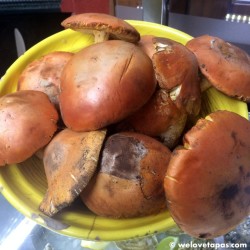
wild mushroomswild mushrooms at Mercado de la Encarnación

Many mushrooms are grown commercially, and are available all year round, but in the autumn a wide variety of wild mushrooms, broadly known as setas in Spanish, though this word is also used for certain specific varieties, too (the common, mainly commercially produced button mushrooms are champiñones), make their appearance in bars, restaurants and markets. Each of them has its own distinct taste and texture, and its own preferred uses.

amaritas azoteagrilled amanitas cesáreas with pesto and parmesan at La Azotea
Boletus (also known as porcini) is one of the most prized. It has a large brown cap that can grow up to 35cm in diameter, though smaller ones are preferred. It has a meaty taste and creamy texture. Most used in soups, pastas and risotto, and is also great in croquettes.

Amanitas cesáreas (Caesar’s mushroom) was a favourite of the Roman emperors. It has a distinctive orange cap and yellow gills and a delicate texture.

Setas, or oyster mushrooms, come in a variety of species, all wide, flat gilled mushrooms, often without a stem. They are normally torn or broken up rather than sliced, and are particularly good for stir fry or sauté.

Níscalo, also known as saffron milk-cap or red pine because of its colour, is often fried whole with garlic and parsley.

Gurumelo is one of the most prized of all wild mushrooms, and is unique to southwestern Spain. Claimed to improve almost any dish, it can be braised, or added to stews or omelettes.

Sevilla | NO8DO

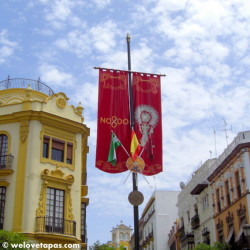
As an observant visitor to our fair city of Seville, you may have noticed, on such diverse objects as lampposts, manhole covers, buildings and garbage trucks, among others, a little motif that seems to read NO8DO, except that the 8 is somewhat large, and often appears as if a little blurred. You may guess from its locations that it is some sort of official logo (it’s actually the city motto), and you may even have wondered what it means. Allow me to explain.

no8do 2

The motif is what is technically known as a rebus (a riddle or puzzle made up of letters, pictures and/or symbols whose names sound like the parts or syllables of a word or phrase). The central 8 represents a skein of wool, in Spanish “madeja”, and yields a phrase that sounds like no-madeja-do, and approximates the Spanish phrase “no me ha dejado” (the h is silent so it’s pretty close), which means “It (Sevilla) has not abandoned me”.

no8do flag

So why is this phrase the motto of the city? Thought you’d never ask. It all goes back to the 13th century (as so much does in these parts), and to the reign of Alfonso X, who succeeded to the throne of Castile and Leon (the castle and lion that you see on the heraldic shield of the Spanish kings) on the death of Ferdinand III, who reconquered Seville from the Moors, in 1252. Known as the Wise, this was more for his intellectual accomplishments than his statecraft, and he was often at odds with his nobles. He had two sons, Ferdinand (the elder) and Sancho. The times were troubled and turbulent, and in the course of one of the intermittent wars with the Moorish kingdom of Granada, Ferdinand was killed at the Battle of Ecija (1275).

no8do

Now Ferdinand had two young sons, and in the normal course of things the line of succession would have passed through them, but taking advantage of the fact that they were still children, Sancho invoked a principle known as Agnatic Seniority (basically this meant that the succession should pass to the younger son of the King (ie Sancho), and not to the children of the deceased older son. Alfonso backed the claim of Ferdinand’s children, the nobles backed Sancho, and civil war ensued. Most of the country was soon under Sancho’s control, but Seville remained loyal to Alfonso (they did not abandon him), and were granted the motto as a reward. Alfonso died in 1284 with the succession issue not officially resolved, although it was Sancho who in fact gained the throne.

So now that you know the story you will no doubt see NO8DO everywhere you go. And now you will know why.

Sevilla | Abacerías

Updated: July 1, 2016

You may notice, or may have already noticed, as you make your way from bar to bar in search of tapas and a drink, that the word abacería (often antigua abacería) appears in some of the names in a way that suggests a particular meaning. But what meaning?

abaceria

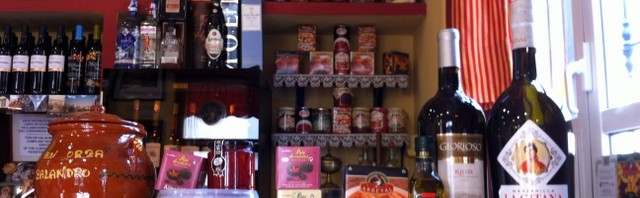
On closer inspection you may notice that as well as being bars, these abacerias are also small shops, selling a variety of foodstuffs, but especially delicatessen (hams and cheeses etc), beans, herbs and spices, and speciality items in tins and jars. In fact, these abacerías (and not all abacerías have the word in the name), were shops first, and shops with a bar later, although the presence of a bar is what distinguishes them from the other type of small grocer’s, the tienda de ultramarinos (literally shop of beyond the sea, originally specialising in products from the New World). The word abacería is Arabic, meaning something like “place of supplies”, and nowadays offer the opportunity to sample anything you’ve bought in the shop while still on the premises. By the mid 20th century abacerias had almost disappeared, but over the last few decades there has been a revival, and both “traditional” and “modern” versions are now very popular.

I love these little treasure troves of culinary delights, where you never know quite what you may find. There’s some nostalgia too; a lot of them have a look and atmosphere of little shops that I remember from my childhood, but transported to a different country and almost magically reinvented. These are some of my favourites, and well worth seeking out for that very special Sevilla experience.

casa moreno

Casa Moreno is one of my favourite places in Sevilla. A tiny shop in front with a little bar hidden away at the back serving mostly montaditos (toasted buns) with delicious meat and cheese fillings. Great atmosphere that’s old fashioned in just the right way.
Casa Moreno
Gamazo
7 Arenal

abaceria san lorenzo

La Antigua Abaceria de San Lorenzo isn’t actually that antigua, though it certainly looks the part. Hidden away in a residential neighbourhood it’s obviously a locals bar, cosy and intimate with everybody on first name terms.
La Antigua Abacería de San Lorenzo
Teodosio 53
San Lorenzo

antigua abaceria triana

La Antigua Abaceria in Triana has something of the feel of a country pub, and is a great little place to stop for a beer and snacks. It’s recently been extended into a second premises next door, but still has the same friendly atmosphere.
La Antigua Abacería
Pureza 12
Triana

la almadraba

La Almadraba is part of a modernising trend at Seville’s oldest market in Calle Feria. As the name suggests it’s all about the tuna, with quality products from top brands such as Herpac.  Don’t miss the mojama (cured tuna). Delicious.
La Almadraba
Feria Market

salsamento
Salsamento is a brand new abacería in the revitalised Regina neighbourhood behind the Metropol Parasol that has succeeded in combining the traditional spirit of the abacería with a totally modern light and clean interior design. There’s a nice mix of cheeses and charcuterie with simple tapas and a nicely displayed range of speciality tinned goods.
Salsamento
Jerónimo Hernández 19
Centro / Regina

federico flores

Flores Jamon y Vinos in Puerta Triana, is a modern, upmarket version of abaceria. Specialising in top quality jamon, but with plenty of other goodies to excite. Eat here or take away, with ham and other cured meats cut to order or available vacuum packed.
Flores Jamones & Vinos
San Pablo 24
Centro/Arenal

Photos courtesy of Azahar Sevilla

Tuna Almadraba

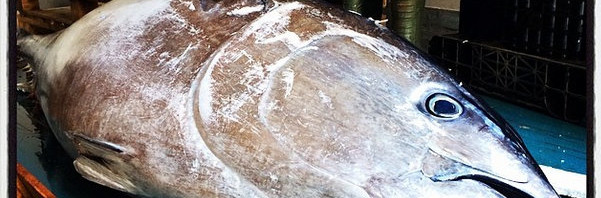
The meat of the Atlantic Bluefin Tuna (also known as Red Tuna in Spain) has long been a prized item in the gastronomy of Spain and the western Mediterranean. These majestic fish, weighing up to 200 kg (and definitely not a small round fish that fits neatly into a tin), normally live in the cold waters of the Atlantic, but every spring they migrate along the west coast of Spain and through the Strait of Gibraltar to lay their eggs in the warm waters of the Mediterranean. And it’s along the southwest coast of Spain, in the fishing towns of Zahara de los Atunes, Conil, Barbate and Tarifa, that they are trapped using the traditional method of the Almadraba.

tuna (1)

The season is brief, starting following the full moon in late April or May. The Almadraba is a system of nets that drive the tuna into a central pond, where they are forced to the surface and are hauled into the fishing boats to be slaughtered. This allows the fisherman to select the best fish, the rest being released to continue their journey, making it a sustainable way of harvesting the bounty of the sea. The fish are normally flash frozen to be sold at auction. The local bars and restaurants in Seville will often buy a tuna, which will last them through the year, being taken from storage to be used as required.

ronqueo The filleting of a tuna, in which the head, tail and fins are removed, and the different cuts separated from the backbone is called the ronqueo (literally, snoring, after the sound of the knife running along the spine of the fish), and an expert can complete the job in about twenty minutes.
The tenderest cuts, especially the ventresca (belly), are of often served raw or marinated. Other parts are usually grilled. Almost all the fish is consumed, including organs and cheeks (considered by many as a great delicacy). Many of the minor cuts, such as Morrillo (collar), were once the food of the poor, retained by the fisherman when the bulk of the fish was sold, but have since become gourmet items.

There are also various Rutas de Atún (Tuna Routes) this time of year, where you can see the fish being caught and prepared.

Sevilla | Vamos a la Feria!

feria 15 (1)

The Feria de Abril is Seville’s traditional spring fair and general celebration, and starts two weeks after Easter Monday (this year April 21 to 26), officially at midnight on Monday with the alumbrao, the switching on of the fairground lights, although in practice people may go to the fairground as early as the Saturday. Monday evening is traditionally the pescaito, the fried fish dinner. The fair runs until Sunday, and finishes with fireworks at midnight.

Originally founded in 1847 as a horse and cattle fair on the Prado San Sebastian, the feria has been held on a purpose built site in Los Remedios since 1973. The streets are lined with little stripy marquees (casetas) where you can eat and drink, and decked with lights and paper globes strung from poles. Fast food and candy stalls are much in evidence, and adjacent to the fairground is an area known as the Calle del Infierno, Hell Street, where you can find the funfair and attractions.

feria 15 (3)

During the day the big draw is the parade of horses and carriages, all groomed and polished and spick and span, the men dressed in the traditional traje corto (short jacket, tight trousers and wide brimmed hat), the women in flouncy polka dot flamenco dresses. Later, many of the participants will head off to the bullring. Bullfighting is still popular in Seville, and the period around feria is the main bullfighting season. The bullfights are also an important social and business occasion, and everybody who’s anybody will be there.

From the evening onwards, though, it’s party time at the fairground. There’s lots of eating and drinking and dancing of Sevillanas, a local flamenco style folk dance. You should try rebujito, a mixture of fino sherry and 7Up, which is the fair’s traditional tipple, though it’s not everyone’s cup of tea, and fried fish, prawns and puchero (a meat stew) to ward off hangover. For those with the stamina the party goes on until dawn. Fortify yourself with chocolate and churros on your way home.

feria 15 (2)To get to the fairground you can take a taxi (which have special – higher – rates this week), one of the regular bus services 6 or C1/C2, or the special Feria bus service that runs from the Prado San Sebastian. It’s also possible to walk, especially if you’re in the southern part of the city.

Sevilla | Semana Santa Preview

ss15

You may think you know something about religious festivals and festivities, but trust us, unless you’ve been to Sevilla for Semana Santa (Holy Week) there’s a definite gap in your education. Although Holy Week is an important festival throughout the Catholic world, the celebrations in Sevilla are thought to be the largest and most elaborate.

The basic format doesn’t sound too complicated. The celebrations are organised by an association of religious brotherhoods (with the co-operation of the City Council), each of which is directly responsible for one of the processions (there are around 40 of these during the course of the week) that carry the statues of the Christ and the Virgin from where they normally “live” to the Cathedral to be blessed, and then return them. The actual mechanics can get complicated, of course, and between the processions and the onlookers a large part of the city, but especially along the processional way and around the Cathedral, is pretty much closed for normal business.

costaleras35 costaleros carry the weight of the pasos on the backs of their necks
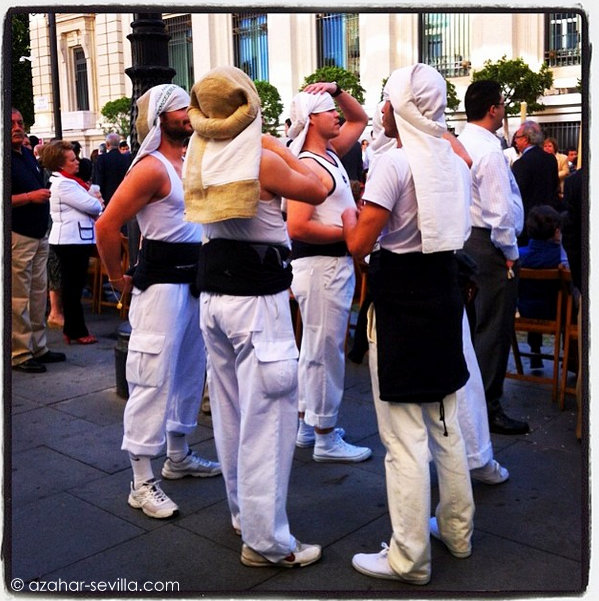
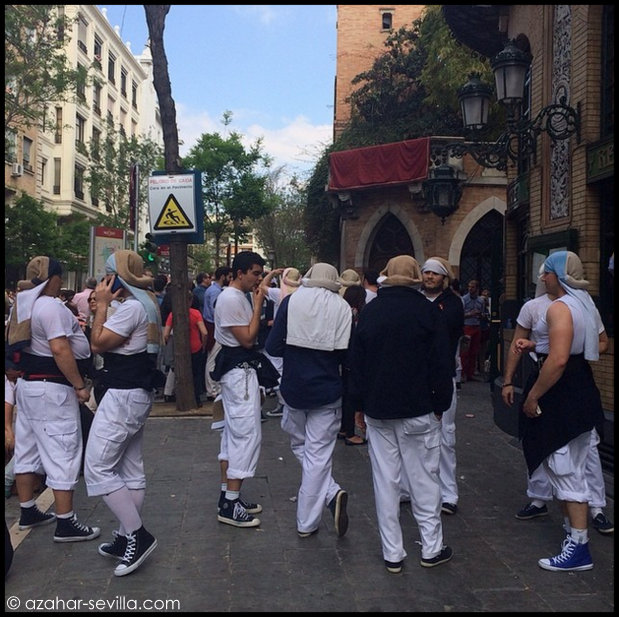
So far so good, but this is where it starts to get a bit weird if you don’t know what’s going on. For a start those floats with the statues are heavy, and also valuable (in most cases very valuable), and they have to be moved purely by manpower, often through narrow streets and around tight corners. The manpower is those guys with the rolled up towels on their heads (actually purpose built headgear) to protect them from the weight of the float. They’re called costaleros, and for a couple of months beforehand they can be found practising their routes with floats weighted with sandbags and concrete blocks.

ss 15 (1)special headgear for carrying the pasos
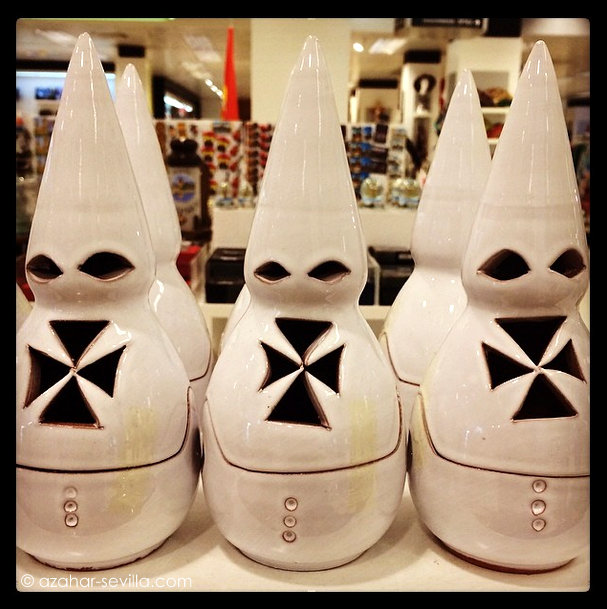
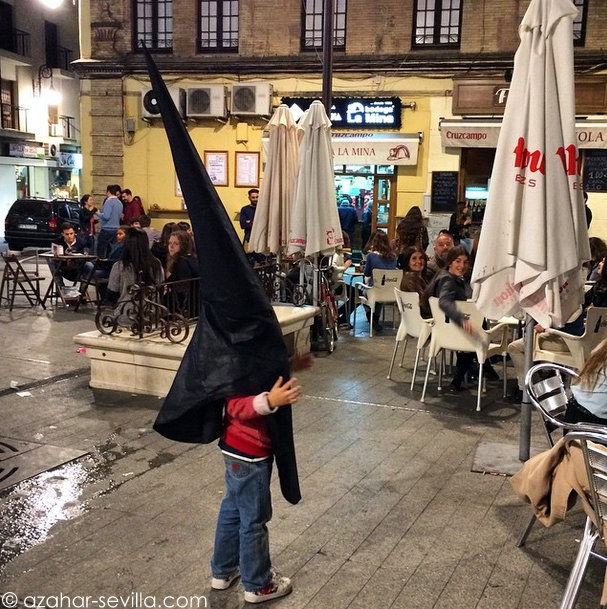
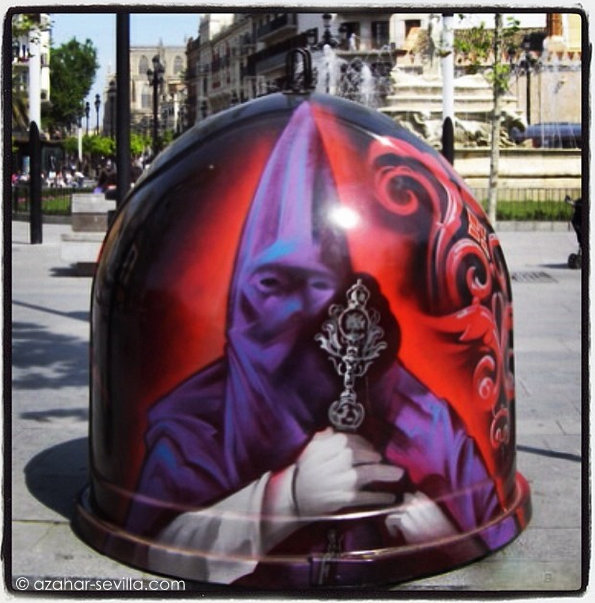
Even odder for the uninitiated are the penitents who accompany the statues. You hardly need us to tell you what most people’s first impression is when they first see them. The pointy hoods serve the same purpose in both cases, though; they preserve the wearer’s anonymity.

ss 15 (4)

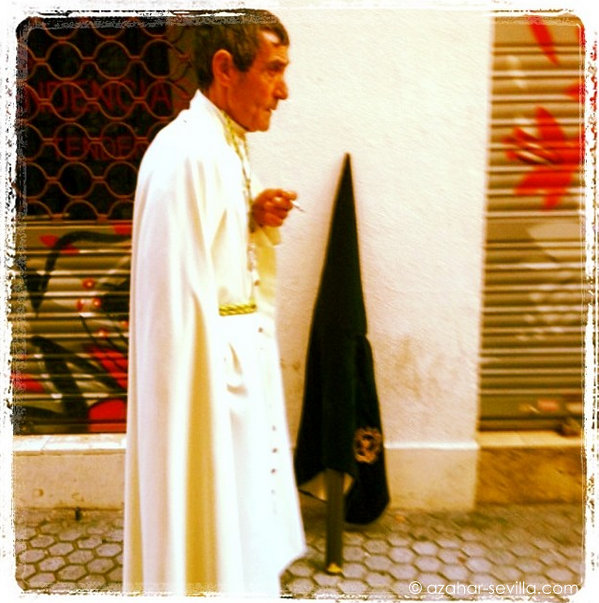
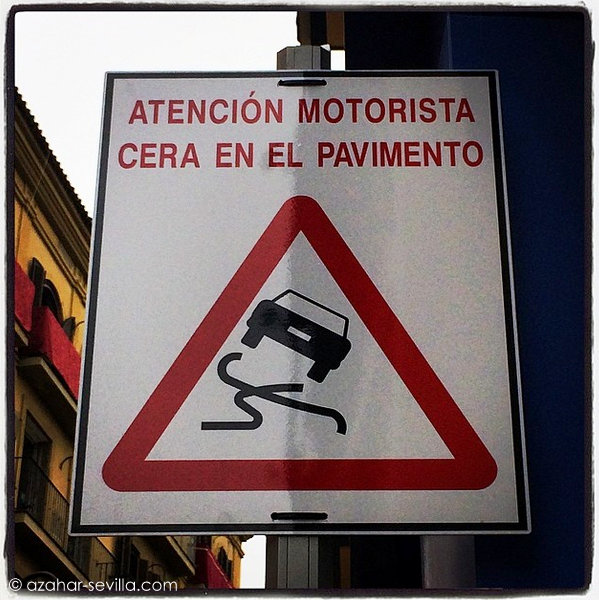
But despite the solemnity of the occasion Holy Week and the period of preparation leading up to it has its moments of humour. Some of our favourites are recorded here, from the boy in an adult’s hood to the cigarette smoking penitent (his world weary expression is priceless), and from the “stormtroopers” to the dangers of driving on wax coated streets, but you’re sure to find plenty of your own too.

ss 15 (3)incense burners

ss 15 (5)semana santa bottle recycle bin

ss 15 (6)smoke break

ss 15 (7)slippery when waxy

ss 15 (8)costaleros taking a break (notice pedestrian slippery when waxy sign)
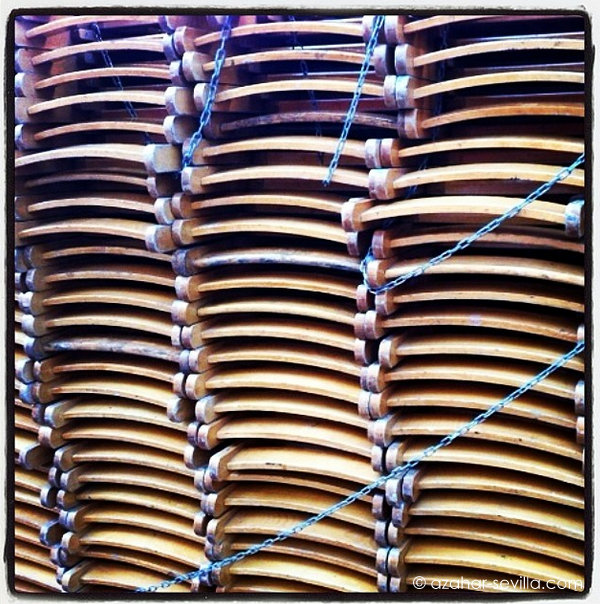
ss 15 (9)stacked chairs along the procession routes
Recipe | Asparagus Tortilla

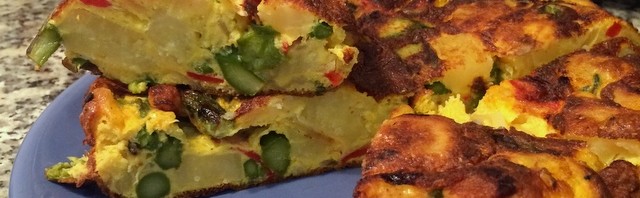
asparagus tortilla

We love cooking! And so we’ll be sharing some of our favourite recipes for our favourite Spanish dishes here from time to time. As it is almost spring we thought we’d start with a spring-veggie twist on a Spanish classic – the tortilla de patatas.

The important thing to know about making a great tortilla de patatas is that you should start with very good olive oil and not be afraid to use it. A traditional tortilla is simply potatoes and egg, but we wanted to give you a jump start on doing your own tortilla creations…

Ingredients

  • one bunch of fresh asparagus
  • one large or two medium (slightly waxy) potatoes, peeled and sliced
  • 6 free range eggs
  • sliced roasted red peppers
  • 1 small onion, finely diced
  • sea salt & freshly ground black pepper
  • olive oil (lots of it)

asparagus tortilla collageSteam the fresh asparagus until tender, then slice into 1 inch bits and set aside. Cut the onion in half lengthwise, then slice finely. Using a 22cm skillet, sauté the potato slices in an abundant amount of olive oil on medium heat, turning occasionally. Halfway through cooking add the onion slices and continue cooking until onions are transparent and the potatoes are cooked through and tender. Remove potatoes and onions to one side and add salt and pepper to taste. Drain olive oil to one side, keeping a bit to cook the tortilla.

Break the eggs into a large bowl and whisk them around until light and frothy. Slice up the roasted red peppers, and add them to the eggs with the cooled cooked asparagus, potatoes and onions. Mix well.

Heat up the same skillet you used to cook the onions and potatoes, adding a bit more olive oil if necessary. When the pan is well-heated pour in the egg mixture and immediately turn the heat down to med-low. Cook until the omelette is almost firm, shaking pan occasionally so it doesn’t stick. Slide omelette onto a plate, invert pan over top, and flip it back into the pan. Continue cooking until the tortilla is set. Place plate over pan, flip the tortilla one more time, and you’re done. Let cool before serving.