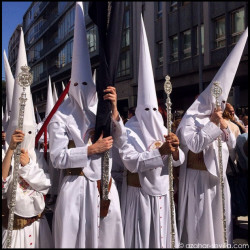

Semana Santa (Holy Week) is Spain’s major annual religious extravaganza, but nowhere is it celebrated on a scale, or with such fervour, as in Seville. From Palm Sunday (although because the processional timetable is so full some brotherhoods go out on the preceding Friday and Saturday) through to Resurrection Sunday the city virtually shuts down as the processions make their way to the Cathedral and back again. Even in this day and age, when religious observance is on the decline, the processions still draw substantial crowds, and for many of those taking part, whether as penitents, musicians or officials, Holy Week is the focal point of the year, and huge investments of time, money, and emotion go into making it the spectacle it is.

But what’s it all about? This is actually quite a complex question. The bare bones don’t seem too complicated. The processions are organised by rather more than forty brotherhoods (hermandades or cofradias) attached to the city’s churches and other religious institutions. The order of the processions during the week follows the events of the original, and each procession consists of at least one, usually two (a Christ and a Virgin), and occasionally three pasos (the floats bearing the religious figures), which are carried from their “homes” to the Cathedral to be blessed. The pasos are accompanied by penitents in traditional robes and hoods (every brotherhood has its own colours) to maintain their anonymity, marching bands, and the various officials who control the movement of the procession.
The origins go back to the 16th century, when the earliest, and simpler, processions made their way from Casa Pilatos (Pilate’s house) to the Cruz del Campo, the Cross in the Field (from which local brewer’s Cruzcampo take their name), but from 1604, by order of the Cardinal, they were obliged to pass through the Cathedral. The use of pasos began around the same time, and increased steadily through the 17th century, which was Seville’s Golden Age of artistic patronage. Then as now, the processions were organised by the hermandades, charitable and mutual aid organisations affiliated to particular churches and trades. At a deep level these were ritual expressions of a social solidarity that has not been entirely lost, even in the present day.
 costaleros taking a break
The floats are carried by teams of costaleros, who bear the weight on the backs of their necks, protected by a sack or costal wound around the head. Because the costaleros are hidden from view by curtains the floats appear to move by themselves (the costaleros are guided by a capataz with a code of taps with a hammer), often with a swaying motion that makes them seem almost alive. Some of the tight corners in the narrow streets are difficult to negotiate, and the costaleros practice the routes for weeks beforehand.
The floats and figures, some of which are important works of art in their own right, are richly decorated and often decked with flowers and candles. With the solemn files of penitents carrying crosses and long candles, and the distinctive music of the bands, the processions can be quite affecting, even for the non-religious, and this is especially true of the processions that go out overnight on Thursday to pass through the cathedral in the early hours of Good Friday.
 chairs stacked in front of La Campana
All the processions pass along the “Sacred Way” as they approach the Cathedral. This runs from La Campana, along Calle Sierpes, through the Plaza San Francisco, and up the Avenida de la Constitución. Terracing with seats (at a price) is provided for the spectators in the last two, and is highly prized for the views of the processions. It is sometimes said there are two types of Sevillanos – those who attend all the processions, and those who leave town for the week.

Not surprisingly with so many people coming into town for the week, hotel and apartment prices increase significantly, so if you’re on any sort of budget and aren’t coming for the religious festival, it may be best to plan your holiday for a different time. As well as that many bars, especially in the centre, will abandon tapas for the week in favour of raciones or a menu del día to improve efficiency.
With that said, however, spring is still the best time to come to Seville, as the weather is usually pleasantly warm and sunny, and the parks and gardens in full bloom. If you’re lucky you may be here when the orange blossom is out, filling the city with its perfume. And Semana Santa in Seville is one of those unique events that you should try to experience once in your life.
photos courtesy of azahar-sevilla.com
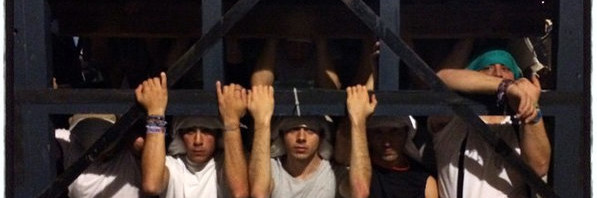
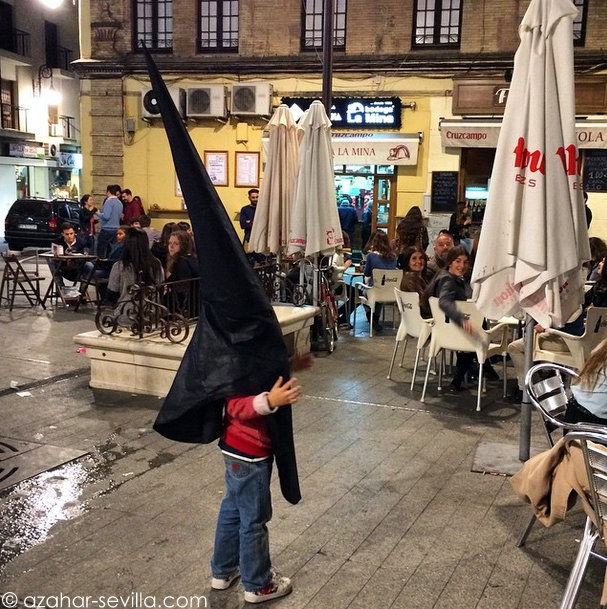
 35 costaleros carry the weight of the pasos on the backs of their necks
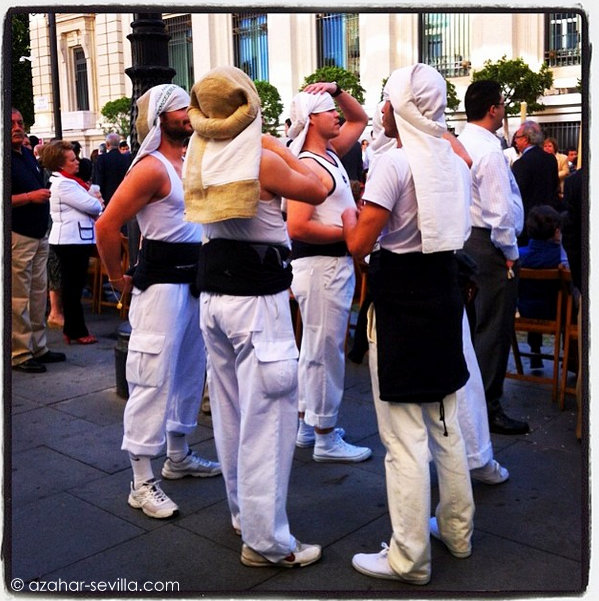 special headgear for carrying the pasos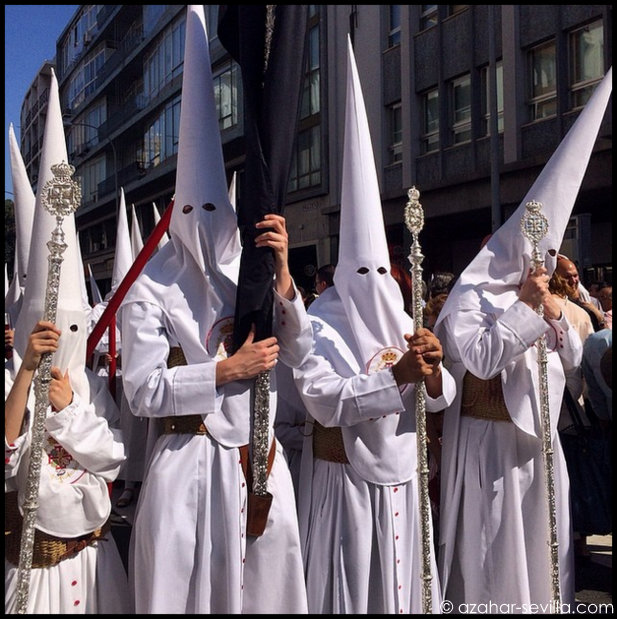
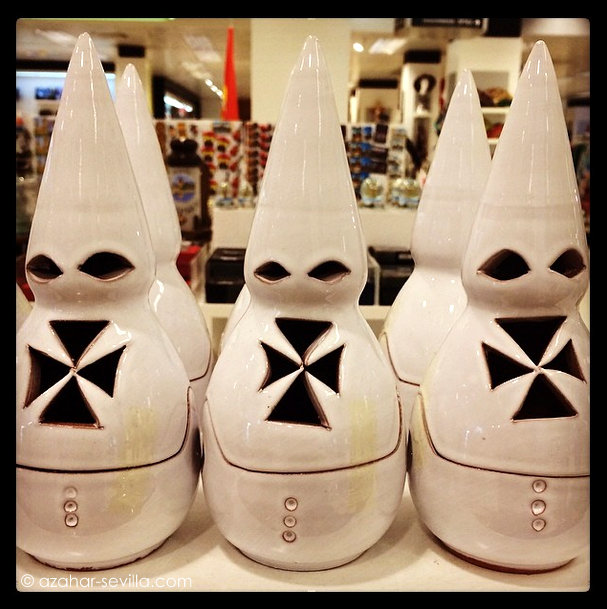 incense burners
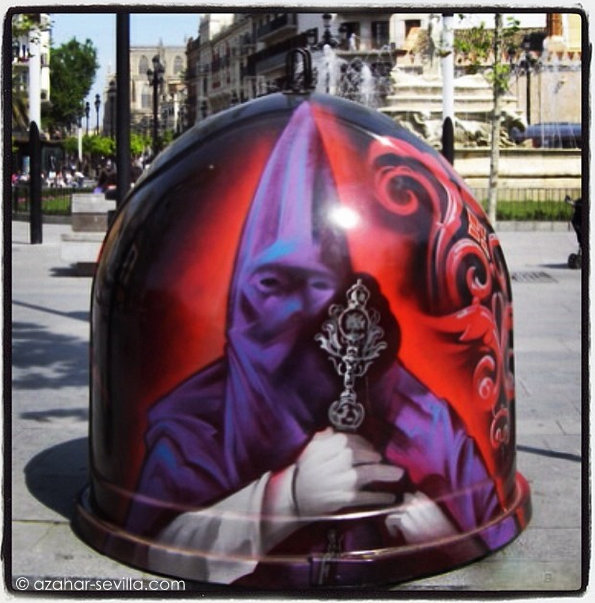 semana santa bottle recycle bin
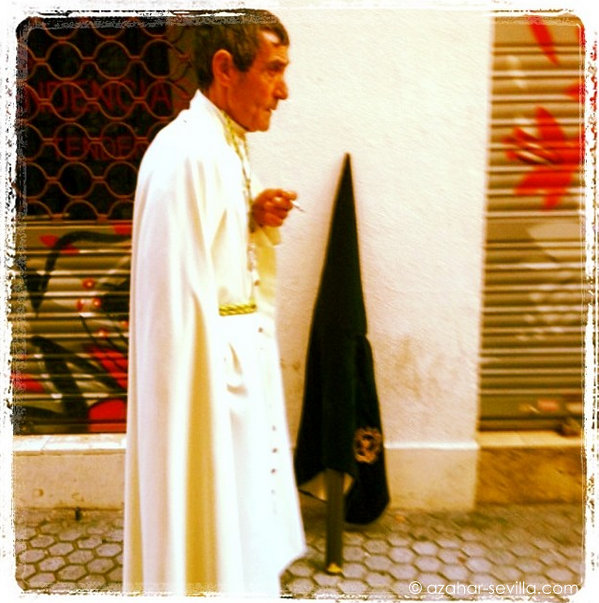 smoke break
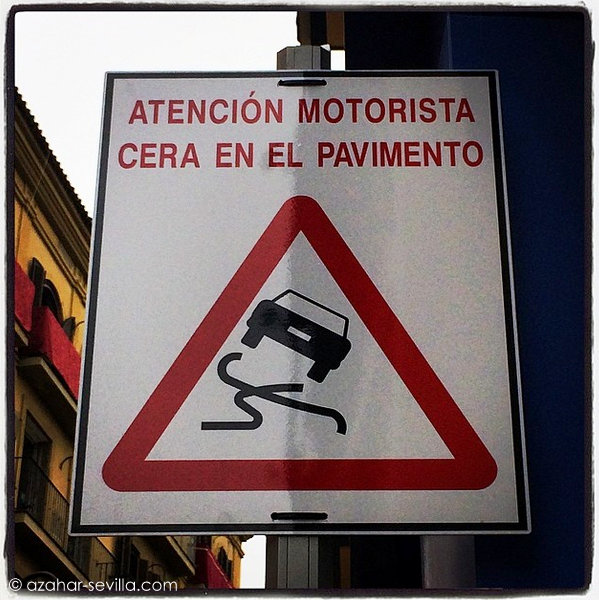 slippery when waxy
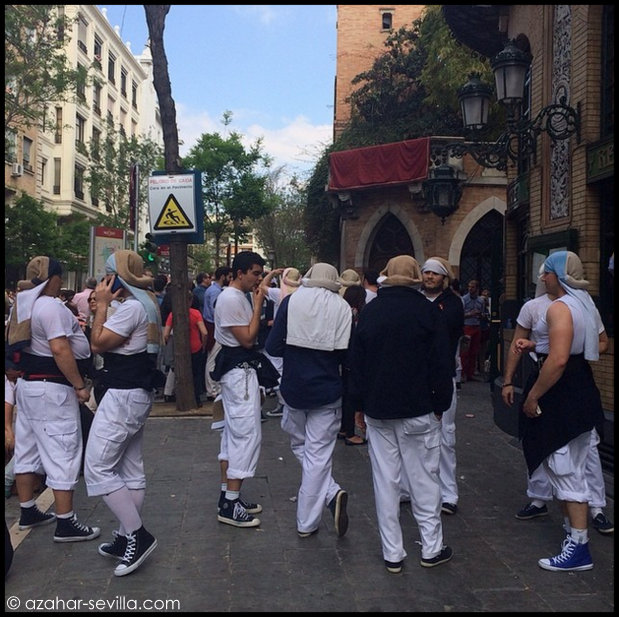 costaleros taking a break (notice pedestrian slippery when waxy sign)
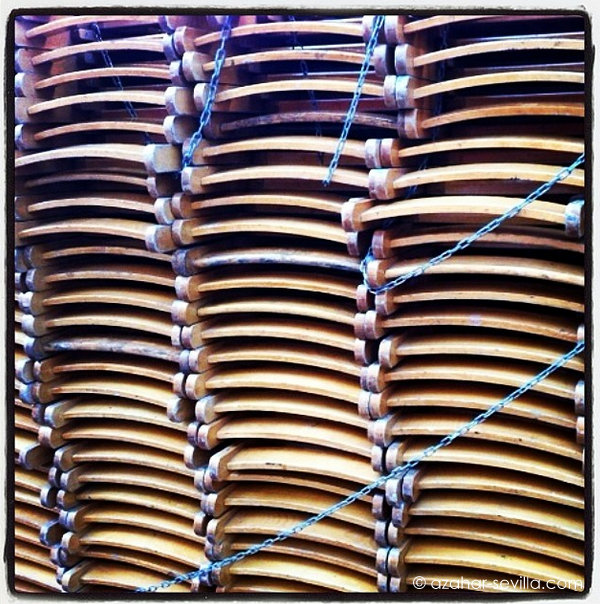 stacked chairs along the procession routes