Semana Santa in Seville

semana santa

Semana Santa (Holy Week) is Spain’s major annual religious extravaganza, but nowhere is it celebrated on a scale, or with such fervour, as in Seville. From Palm Sunday (although because the processional timetable is so full some brotherhoods go out on the preceding Friday and Saturday) through to Resurrection Sunday the city virtually shuts down as the processions make their way to the Cathedral and back again. Even in this day and age, when religious observance is on the decline, the processions still draw substantial crowds, and for many of those taking part, whether as penitents, musicians or officials, Holy Week is the focal point of the year, and huge investments of time, money, and emotion go into making it the spectacle it is.

semana santa (2)

But what’s it all about? This is actually quite a complex question. The bare bones don’t seem too complicated. The processions are organised by rather more than forty brotherhoods (hermandades or cofradias) attached to the city’s churches and other religious institutions. The order of the processions during the week follows the events of the original, and each procession consists of at least one, usually two (a Christ and a Virgin), and occasionally three pasos (the floats bearing the religious figures), which are carried from their “homes” to the Cathedral to be blessed. The pasos are accompanied by penitents in traditional robes and hoods (every brotherhood has its own colours) to maintain their anonymity, marching bands, and the various officials who control the movement of the procession.

The origins go back to the 16th century, when the earliest, and simpler, processions made their way from Casa Pilatos (Pilate’s house) to the Cruz del Campo, the Cross in the Field (from which local brewer’s Cruzcampo take their name), but from 1604, by order of the Cardinal, they were obliged to pass through the Cathedral. The use of pasos began around the same time, and increased steadily through the 17th century, which was Seville’s Golden Age of artistic patronage. Then as now, the processions were organised by the hermandades, charitable and mutual aid organisations affiliated to particular churches and trades. At a deep level these were ritual expressions of a social solidarity that has not been entirely lost, even in the present day.

semana santa (1)costaleros taking a break

The floats are carried by teams of costaleros, who bear the weight on the backs of their necks, protected by a sack or costal wound around the head. Because the costaleros are hidden from view by curtains the floats appear to move by themselves (the costaleros are guided by a capataz with a code of taps with a hammer), often with a swaying motion that makes them seem almost alive. Some of the tight corners in the narrow streets are difficult to negotiate, and the costaleros practice the routes for weeks beforehand.

The floats and figures, some of which are important works of art in their own right, are richly decorated and often decked with flowers and candles. With the solemn files of penitents carrying crosses and long candles, and the distinctive music of the bands, the processions can be quite affecting, even for the non-religious, and this is especially true of the processions that go out overnight on Thursday to pass through the cathedral in the early hours of Good Friday.

semana santa (5)chairs stacked in front of La Campana

All the processions pass along the “Sacred Way” as they approach the Cathedral. This runs from La Campana, along Calle Sierpes, through the Plaza San Francisco, and up the Avenida de la Constitución. Terracing with seats (at a price) is provided for the spectators in the last two, and is highly prized for the views of the processions. It is sometimes said there are two types of Sevillanos – those who attend all the processions, and those who leave town for the week.

semana santa (3)

Not surprisingly with so many people coming into town for the week, hotel and apartment prices increase significantly, so if you’re on any sort of budget and aren’t coming for the religious festival, it may be best to plan your holiday for a different time. As well as that many bars, especially in the centre, will abandon tapas for the week in favour of raciones or a menu del día to improve efficiency.

With that said, however, spring is still the best time to come to Seville, as the weather is usually pleasantly warm and sunny, and the parks and gardens in full bloom. If you’re lucky you may be here when the orange blossom is out, filling the city with its perfume.  And Semana Santa in Seville is one of those unique events that you should try to experience once in your life.

photos courtesy of azahar-sevilla.com
Seville | Alternative Markets

Alternative shopping

At this time of year with Christmas just around the corner Seville city centre is crowded with shoppers looking for the best presents they can find. But how can we make our loved ones happy while still supporting local businesses? Actually, there are plenty of options and we’ve come up with this little guide to help you.

Craft Markets

mucho-mas-que-market

  • Mucho Maske Market
    This little craft market started up 9 years ago, and has been held in a variety of locations. This year it’s in the Regina area behind the Metropol Parasol (calle Viriato, 9) from the 17th until the 20th of December and will showcase 19 different brands, including jewellery and wooden toys.

12308556_1014598065268958_718657792021520578_n

  • El Butrón Market
    El Butrón is a cultural space where artists can meet and display their creations in temporary exhibitions. This is it’s 4th year, and it’s running from the 18th to the 20th of December at calle Butrón, 7, with workshops, music and organic food.

mercadoartesania

  • Mercado de Artesanía
    Organized by the Federación Artesanal de Sevilla and the City council Seville’s famous annual hadicraft market is already open in Plaza Nueva and will be there until the 5th of January, with a wide range of quality merchandise to choose from.

Shopping by Barrio

Captura de pantalla 2015-12-18 a las 15.03.57
Regina Market

The Regina market, actually an association of small local shops in Viriato, Jerónimo Hernández and Amparo streets, offers an individualistic style of shopping, with a mix of the moderni and the traditional. Some of the shops you can explore to find your presents are Un gato en bicicleta, La seta coqueta, Wabi Sabi, Un Globo or Pai-pai shop.

Captura de pantalla 2015-12-18 a las 15.34.11

Soho Benita
On the southern side of Las Setas we find another big area full of small fashion, design, and art places, together with some of the bars we visit in our tours and recommend in this blog. Spend a day in this neighbourhood and discover how Seville can be traditional and surprising at the same time. Soho Benita shops are Artefactum, Delimbo, Eirín, Florypondio, Isadora, La Importadora, Le Voilà, Patricia Buffuna, Taranta, Rayuela, Zález, Made with lof, Zapata and Verde Moscú, among others.

Feria/San Luis/Macarena
As well as “el Jueves” in calle Feria, the oldest flea market in Europe that takes place every Thursday morning, there are many handicraft workshops that have appeared in this neighbourhood in recent years.

  • La Osa Mallol
    A couple of years ago two great designers joined forces to share a space where they could create and sell their range of clothing, as well as teaching others how to do the same. Their names are Hisabelia and Loulitas and La Osa Mallol is their studio/atelier (Pasaje Mallol, 31). Whenever you go there they will offer you a cup of tea, but this weekend there will also be anisette and polvorones (Spanish Christmas’ shortbreads).315716_120518291442989_704227686_n
  • Desmontando a La Pili
    Diversity, feminism and responsible consumption are the name of the game here. So that you can be sustainable even in bed, Mónica Ortiz has come up with some options to make sex better. Her products, available through her website and her fantastic Tuppersex meetings, are designed for learning, solving problems and having fun. Give yourself or someone you love some pleasure and contact her at info@desmontandoalapili.com or find her at Tramallol (Pasaje Mallol, 22).12369190_425599504231584_7641245861606291842_n
  • Rompemoldes
    This is a group of workshops specialising in a variety of different crafts. Some are also shops where their products are sold, while others work on commission only basis. Located in a council owned building, this is a secluded space with a wonderful courtyard full of plants. Open the door (San Luis, 70) and sneak in, you won’t regret it!61444_129336633888982_1235443666_n
  • Lino y fino
    Petra started creating and selling handmade linen clothes in Tarifa, near Cadiz, in 1998. She now has two more shops, and we are lucky to have one at calle San Luis, 72. She uses 100% pure linen for unique women’s, men’s and children’s clothes. She also uses some warmer fabrics for winter!10639723_765154423569614_5246665074246108001_n
  • Santa Cleta
    There are many bike shops in Seville, a result of growing interest in green transport options, but the most sustainable, committed and active one is Santa Cleta. They won’t only sell you a bike, but will also teach you how to ride it, no matter what your age, and how to maintain and repair it! Ride, or walk, to Plaza del Pumarejo and take the street on the right hand side of the old palace: Fray Diego de Cádiz, 24.1000779_553683444691065_347742336_n


Remember: Think global, shop local and buy handmade.

Callejeando Food Fest in Sevilla

What does foodie heaven look like? We bet it looks something like this…

sunset

It all happened this past weekend in Seville and of course we were there, eating and drinking non stop! There were 19 different food trucks from all over Spain with their delicious creations. To start we tried out our own local food truck, La Cayejera, which can usually be found under Triana bridge or at Torre Pelli.

callejeando (6)

The food truck concept was developed in USA but though the idea has been imported from the states, everything else is local, like this amazing Retinto beef with Payoyo cheese from Cadiz, the basic ingredients for the Brilla Bombilla hamburger.

callejeando (7)

In Spain we know all about meat, which is why Ox&Roll people were more than prepared to raise a very special one here: Wagyu. You may have heard about Kobe but this is the 100% real one, the genuine article guaranteed by Japanese organizations. They take great care of the animals and of the whole production process, and the result is the tastiest steak we have ever tried.

callejeando (3)

Culinary fusions are another important element in food trucks recipies, and Tabe Gozo is a perfect example. They were travelling around when came up with the idea of a basque-japanese mix for their project. They even make their own bread.

callejeando (2)

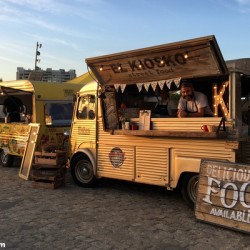
El Kiosko came with one of their three food trucks and created a special crispy chicken and nachos burger just for this event! BoKarte is its name and here you can learn how to make it: Bokarte de Pollo

callejeando (8)

These guys spent 15 hours driving to get here from Barcelona, but it was worth the ride because they surprised everybody with their chips nest, as you can see by the long line of hungry customers. La Internacional is an example of how passionate one must be to start this adventure and how successful it can be.

callejeando (4)

On a recent national TV show called Cocineros al Volante food trucks had to prove their value, and we have the winner here: Javier Brichetto. As you can imagine, we were already really full by then but he had created a burger good enough to be considered the best among so many others…so we had to try it!

callejeando (5)

Since nature gave us a separated stomach for dessert we could still enjoy Manu Jara’s surprising creations. He prepares cookies, truffles, cakes, and of course his signature choco-burger.

The event has been such a success that they are planning to do it every three months so we will keep an eye out for this Festival, in the hope that there will be more food trucks coming!

Sevilla | Vamos a la Feria!

feria 15 (1)

The Feria de Abril is Seville’s traditional spring fair and general celebration, and starts two weeks after Easter Monday (this year April 21 to 26), officially at midnight on Monday with the alumbrao, the switching on of the fairground lights, although in practice people may go to the fairground as early as the Saturday. Monday evening is traditionally the pescaito, the fried fish dinner. The fair runs until Sunday, and finishes with fireworks at midnight.

Originally founded in 1847 as a horse and cattle fair on the Prado San Sebastian, the feria has been held on a purpose built site in Los Remedios since 1973. The streets are lined with little stripy marquees (casetas) where you can eat and drink, and decked with lights and paper globes strung from poles. Fast food and candy stalls are much in evidence, and adjacent to the fairground is an area known as the Calle del Infierno, Hell Street, where you can find the funfair and attractions.

feria 15 (3)

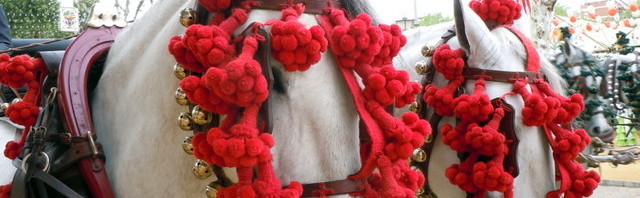
During the day the big draw is the parade of horses and carriages, all groomed and polished and spick and span, the men dressed in the traditional traje corto (short jacket, tight trousers and wide brimmed hat), the women in flouncy polka dot flamenco dresses. Later, many of the participants will head off to the bullring. Bullfighting is still popular in Seville, and the period around feria is the main bullfighting season. The bullfights are also an important social and business occasion, and everybody who’s anybody will be there.

From the evening onwards, though, it’s party time at the fairground. There’s lots of eating and drinking and dancing of Sevillanas, a local flamenco style folk dance. You should try rebujito, a mixture of fino sherry and 7Up, which is the fair’s traditional tipple, though it’s not everyone’s cup of tea, and fried fish, prawns and puchero (a meat stew) to ward off hangover. For those with the stamina the party goes on until dawn. Fortify yourself with chocolate and churros on your way home.

feria 15 (2)To get to the fairground you can take a taxi (which have special – higher – rates this week), one of the regular bus services 6 or C1/C2, or the special Feria bus service that runs from the Prado San Sebastian. It’s also possible to walk, especially if you’re in the southern part of the city.