
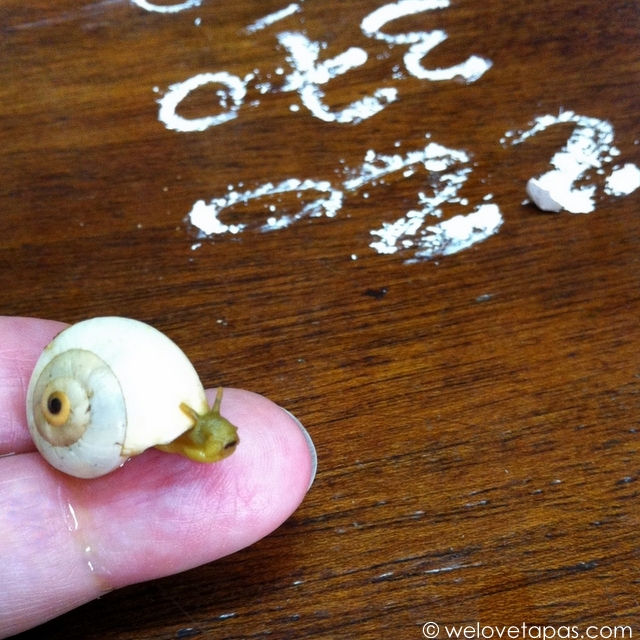
For most English speaking people at least the eating of snails is associated with the French and their escargots, but in fact snails are eaten all around the Mediterranean, and Spain, where they are known as caracoles (the small ones) and cabrillas (the big ones), is no exception. Snail season, which runs through mid-April to late-June, is eagerly awaited, and announced by many bars with a drawing of a snail and “hay caracoles!” (there are snails!).
Caracoles are prepared by cooking them in a broth, usually with garlic and black pepper, and the quality of the broth is generally accepted as central to the quality of the dish served to customers. Cabrillas tend to be cooked in a thicker tomato-based sauce. Bars have their own “secret” recipes, so if you want to enjoy some snails while you are in Seville, knowing where to go is essential. These are 5 of our favourites.
Casa Antonio – Bar Los Caracoles
Perez Galdos, 13
Tel: +34 954 213 172

A small family run bar just off the Plaza Alfalfa, Casa Antonio – Bar Los Caracoles is one of the best for snails served with a side of broth, and also specializes in great fish and seafood tapas.
Bodega La Mina
Cuesta del Rosario, 7
Tel: +34 954 214 092

Another small traditional bar near the centre where you can be assured of a warm welcome and a cold beer or glass of manzanilla. Also famous for its mojama (cured tuna) and chicharrones it’s a great place to start your tapeo.
Casa Ruperto
Santa Cecilia, 2
Tel: +34 954 086 694

Triana, the working class neighbourhood across the river, is famous for almost everything traditionally Sevillano – flamenco, bullfighters, seafood – and snails. Casa Ruperto is a no frills kind of a place but is justly renowned for its snails (also for its quail, but that’s another story).
Casa Diego
Alfarería, 5
Tel: +34 663 520 221

Also in Triana, not far from the market, Casa Diego serves up some great caracoles, which you can enjoy with a chilled manzanilla or a cold beer from their unique beer pump in the form of the nearby Santa Ana Church.
Bar Alfonso – El Rey de Los Caracoles
Santas Patronas, 5
Tel: +34 954 225 960

Alfonso Pérez was dubbed “The King of the Snails” in 1988 and his bar, now run by son Manuel, offers both caracoles and cabrales in season. Both are delicious and can be ordered to eat in or take-away.
Hola!
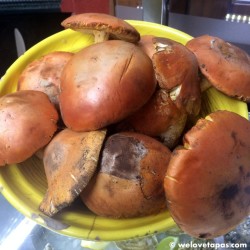
 amanitas cesáreas
 seasonal mushroom selection at Restaurante Modesto
 wild mushrooms at Mercado de la Encarnación
 grilled amanitas cesáreas with pesto and parmesan at La Azotea