Seville | Calvisius Caviar Tasting at Sea Market

caviar (1)
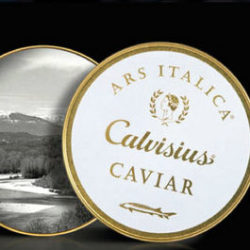
We Love Tapas had the opportunity for a visit to the recently opened Sea Market restaurant in the Avenida Eduardo Dato in Seville. We had been invited to attend a tasting of one of the most highly regarded, but possibly least known products of the sea – caviar. The tasting was hosted by Calvisius Caviar, by Export Manager Sara Morales, who began by giving us a masterful tour through the history of caviar and the different kinds of caviar produced under their brand name, which come from various species of sturgeon, before going on to the tasting itself.

caviar
We tried four different kinds of caviar, each time being given just a few of the small black eggs that we had to put on the back of our hands until they were the perfect temperature. Then, while we rolled them around in our mouths, Sara explained all the flavours, textures and smells we were eperiencing! After each tasting we were served a perfectly chosen cava from Llopart, to pair with the particular caviar we were tasting.

cava

It was a great introduction to the mysteries of caviar, but there was also a negative side to our experience at Sea Market. It is easy to be impressed when you visit the restaurant, as it is a very chic establishment: everything is what you would expect from a modern restaurant, with an aesthetic and atmosphere that many people are looking for.

But though these things are obviously important, it is also important to take care of other aspects of a business that serves the public, and we were disappointed with the standard of service we received. The serving staff appeared to be lacking in training in how to serve these particular delicacies, although this event must have been an important one for a new restaurant. Recognised brands like Calvisius and Llopart, and the various dishes the chef prepared for us during the tasting, definitely deserved better.

Sherry 101

Although there may be other “sherry style” wines, true sherries are those wines, and only those wines, produced in the area around Jerez de la Frontera in southwest Spain, or more specifically, those wines aged in the towns of Jerez, Puerto de Santa Maria, and Sanlúcar de Barrameda under the rules of the Consejo Regulador for the “Denominaciones de Origen” of Jerez and Manzanilla.

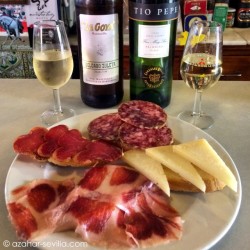
sherry and tapas (1)

We meet a lot of people who associate sherry with that sweet, dark liquid produced for Christmas gatherings by grandmothers and maiden aunts, but there’s a whole world of sherries beyond this, and its aficionados consider it as possibly the world’s most fascinating and underrated wine. So what’s so special about sherry?

Sherries come in a range of styles from light super-dry wines to dense, dark sweet ones. Historically, England has a long connection with sherry (they were highly praised by Shakespeare); English names like Harvey’s and Humbert & Williams feature among the bodegas of Jerez, and the English have been a major consumer of cream sherries in particular. But although there are some excellent wines right across the spectrum, the upsurge of interest in recent years has been in the dry sherries in particular.

saturday sherry

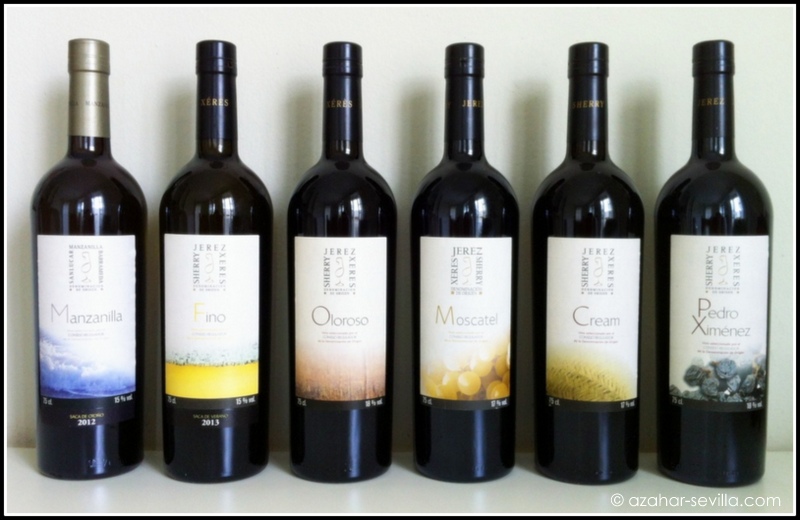
Dry sherries come in two basic styles – those that are biologically aged under a layer of yeast (called flor), and those that are aged oxidatively, or in contact with the air. The former are either Manzanillas (from Sanlucar), or Finos (from Jerez and El Puerto), and the latter are Olorosos (there are some additional twists to the story, but more of that later). All dry sherries are made from the Palomino Fino grape variety (Manzanillas and Finos generally from the first pressing to make a lighter wine, Olorosos from the second for a fuller body; the third pressing is used for grape spirit and vinegar), are fortified (have grape spirit added to increase the level of alcohol), and are aged in a system called a solera.

copa jerez

The wine coming out of fermentation is generally around 12%. It is then raised to an alcohol level of around 15-16%, which helps a vigorous growth of yeast to cover and shield the wine from the air while the yeast consumes the sugars in it (biological aging). Olorosos are fortified to even higher levels, about 17-18%, to prevent the yeast from growing (oxidative aging).

Two of the most highly prized dry sherries are amontillado and palo cortado. Amontillados are initially aged like finos, but after about 3 years extra alcohol is added to kill the yeast, and the sherry is thereafter aged oxidatively, creating a complex and versatile wine. Palo Cortados also start life as finos, but the yeast dies or is killed very early on to create what is, in effect, an oloroso made from the lighter first pressing.

sherry tour (4)

At the other end of the spectrum are the sweet sherries. These are made from the sweeter Pedro Ximenez and Muscat grapes. Good sweet sherries are dark, smooth and rich, often with a flavour of raisins, as the grapes are partially sun-dried before pressing to concentrate the sugar.

Cream sherries are a blend of dry sherry (usually oloroso, but fino based cream sherries are also possible) with sweet wines, either moscatel or PX, and are the style that used to be the most popular in Britain, with something of a boom in the 60s and 70s, when brand names like Harvey’s Bristol Cream and Croft Original were in vogue.

sherry tour

If you’re coming to Spain and have never had sherry this is the time to learn something about this complex and enigmatic wine, and to discover why so many of those involved with sherry get so passionate about it. To have a personalised sherry experience we recommend the Introduction to Sherry tour (with tapas!) offered by Official Sherry Educator Shawn Hennessey of Azahar Sevilla, and featured in Telegraph Travel as one of the Top 10 Food and Drink Holidays in Spain.

 photos courtesy of Azahar Sevilla

Sevilla | Abacerías

Updated: July 1, 2016

You may notice, or may have already noticed, as you make your way from bar to bar in search of tapas and a drink, that the word abacería (often antigua abacería) appears in some of the names in a way that suggests a particular meaning. But what meaning?

abaceria

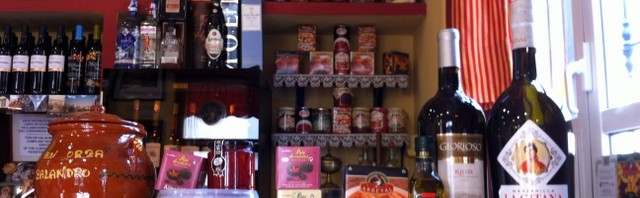
On closer inspection you may notice that as well as being bars, these abacerias are also small shops, selling a variety of foodstuffs, but especially delicatessen (hams and cheeses etc), beans, herbs and spices, and speciality items in tins and jars. In fact, these abacerías (and not all abacerías have the word in the name), were shops first, and shops with a bar later, although the presence of a bar is what distinguishes them from the other type of small grocer’s, the tienda de ultramarinos (literally shop of beyond the sea, originally specialising in products from the New World). The word abacería is Arabic, meaning something like “place of supplies”, and nowadays offer the opportunity to sample anything you’ve bought in the shop while still on the premises. By the mid 20th century abacerias had almost disappeared, but over the last few decades there has been a revival, and both “traditional” and “modern” versions are now very popular.

I love these little treasure troves of culinary delights, where you never know quite what you may find. There’s some nostalgia too; a lot of them have a look and atmosphere of little shops that I remember from my childhood, but transported to a different country and almost magically reinvented. These are some of my favourites, and well worth seeking out for that very special Sevilla experience.

casa moreno

Casa Moreno is one of my favourite places in Sevilla. A tiny shop in front with a little bar hidden away at the back serving mostly montaditos (toasted buns) with delicious meat and cheese fillings. Great atmosphere that’s old fashioned in just the right way.
Casa Moreno
Gamazo
7 Arenal

abaceria san lorenzo

La Antigua Abaceria de San Lorenzo isn’t actually that antigua, though it certainly looks the part. Hidden away in a residential neighbourhood it’s obviously a locals bar, cosy and intimate with everybody on first name terms.
La Antigua Abacería de San Lorenzo
Teodosio 53
San Lorenzo

antigua abaceria triana

La Antigua Abaceria in Triana has something of the feel of a country pub, and is a great little place to stop for a beer and snacks. It’s recently been extended into a second premises next door, but still has the same friendly atmosphere.
La Antigua Abacería
Pureza 12
Triana

la almadraba

La Almadraba is part of a modernising trend at Seville’s oldest market in Calle Feria. As the name suggests it’s all about the tuna, with quality products from top brands such as Herpac.  Don’t miss the mojama (cured tuna). Delicious.
La Almadraba
Feria Market

salsamento
Salsamento is a brand new abacería in the revitalised Regina neighbourhood behind the Metropol Parasol that has succeeded in combining the traditional spirit of the abacería with a totally modern light and clean interior design. There’s a nice mix of cheeses and charcuterie with simple tapas and a nicely displayed range of speciality tinned goods.
Salsamento
Jerónimo Hernández 19
Centro / Regina

federico flores

Flores Jamon y Vinos in Puerta Triana, is a modern, upmarket version of abaceria. Specialising in top quality jamon, but with plenty of other goodies to excite. Eat here or take away, with ham and other cured meats cut to order or available vacuum packed.
Flores Jamones & Vinos
San Pablo 24
Centro/Arenal

Photos courtesy of Azahar Sevilla

Postcards from Andalucía | Antequera

We love Andalucia! And to start off our series of “postcards” from our travels around the most southern region of Spain – where we live! – we’d like to introduce you to one of our favourite places, Antequera. Andalucía is justly famous for its great classical and mediaeval cities – Seville, Málaga, Cádiz, Córdoba and Granada – but its riches are by no means confined to these. Beauty, culture (and good food) can be found almost everywhere you look in this part of Spain, and we hope our postcard posts will encourage you to explore further afield, and perhaps enjoy some things that not everyone gets to experience.

antequera (1)

Antequera, in the province of Málaga, is officially the centre of Andalucia, and has a plaque and small pillar in the Plaza San Sebastian to mark the spot. It’s easy to reach by train or car from Córdoba, Granada, Málaga or Sevilla, and as well as its picturesque small town charm it boasts a number of monuments that reflect its complex and fascinating history (including the Alcazaba fortress on a hill on the southern edge of town), and a number of unique attractions nearby.

Just outside the town, and easily visible from the Alcazaba Hill, is the strangely shaped mountain of Peña de Los Enamorados (Lovers’ Rock) A poem by Robert Southey reflects the story of two young lovers from rival Moorish clans who are said to have thrown themselves to their deaths from the top while being pursued by the girl’s father.

antequera (4)view of Antequera from the Alcazaba

A little way to the north are the burial mounds of Viera and Menga, which are more than 4,000 years old, and among the largest in Europe. Further afield, but worth considering if you’re here for more than a day trip, are the nature reserve of El Torcal, famous for its bizarre limestone rock formations, the gorge of Los Gaitanes and the King’s Way, and the Fuente La Piedra, a saltwater lagoon that is a major breeding place for the pink flamingo. Also worth a visit is the wolf sanctuary of Parque Lobo.

antequera (6)The Alcazaba was built by the Moors in the 13th century after the Christian kings conquered Cordoba, and finally fell to the future Ferdinand I of Aragon in 1410. It’s well worth a visit, with an excellent audio guide to the castle, and panoramic views of the town and surrounding countryside (look out for the golden angel on top of the San Sebastian church tower). Antequera is also famous for its large number of churches, convents and palaces (it’s sometimes called the city of churches), mostly built in the period of prosperity after the discovery of the New World, and an important museum which you can find in the Nájera Palace in the Coso Viejo.

But now let’s talk about what you’ve all been waiting for … the food! Antequera is the home of the mollete, a special type of soft bread bun, typically served for breakfast. Though the debate still rages about whether to toast the mollete before or after cutting it open (we agree with our friends @PolloyEnsalada that the latter is preferable).

antequera (2)breakfast mollete with olive oil, tomato and jamón serrano

Another thing we liked about breakfast in Antequera is that you can order their crispy and delicious version of churros by the ring…

antequera (3)two rings of churros please!

Porra, a thick cold tomato soup similar to salmorejo, is also an Antequera staple. There are a lot of good bars where you can sample this, and other local dishes, but be sure to pay a visit to Arte de Cozina, our favourite restaurant in the town, which specialises in old traditional, often forgotten, local recipes (chef Charo Carmona will even give you the recipes to take home with you). Opt for either the tapas bar or restaurant and enjoy some of the best traditional food in Andalucía.

antequera (5)three types of porra: tomato, blanca and orange

Have you visited Antequera? Did you love it as much as we do?
Tapas 101

tapas avatarWhat better way to start our new blog than to tell you something about what we love? We’re talking tapas, of course – those nifty little snacks that you buy to go along with your drink, and which can rapidly add up to a complete meal.

But what exactly is a tapa? What’s so special about them? And why are there so many tapas bars, and what should you expect when you go into one?

A tapa is, literally, a lid or a cover, and the name derives from the practice of landlords serving a piece of bread, ham or cheese to put over the drinks to keep out the dust and flies. This is rarely needed now, though if the bar you’re in is really crowded the top of your glass may still be the only place to put your plate!

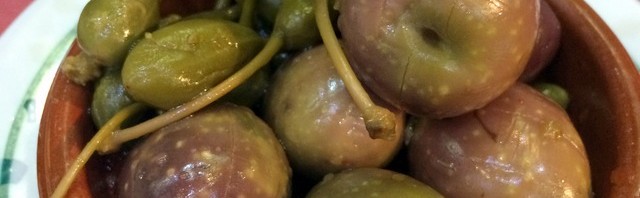
olivesBut there’s more to tapas than just food, of course. In Andalucía tapas is part of the social culture, and it’s something that every visitor to Spain should experience, preferably in the form of a “tapeo”, which is going from bar to bar for drinks and tapas (one of the reasons there are so many of them).

Tapas are typically informal. Food is often shared between friends or family, and because the bars are often busy they may be eaten standing at the bar or at small tables, or even shelves or upturned barrels, and the atmosphere is noisy and convivial. The style of the different bars can be quite varied, but posters for those other Sevillano traditions, bullfighting, flamenco, Semana Santa (Holy Week) and Ferias are common. So too are the cured hams hanging from the rafters, picos (little breadsticks), and paper napkins seemingly specially designed not to absorb any spillages. Bars that are full of locals will usually be the best, but the only ways to be sure are trustworthy recommendation and trial and error.

jamonesBefore ordering check whether tapas are available at the tables or outside (sometimes you have to order raciones – full size plates), or only at the bar. Once seated (or stooded, if you’re at the bar), don’t order everything at once – it may all come at once, get cold, or just be more than you need – just one or two tapas each to start, and more as you go. Expect to pay around €2-3 for a tapa, though it can go as high as €6, especially in “gastrobars”. The barman will usually keep a tab for you, which is paid at the end, but if you’re eating outside you may have to “pay as you go”. There aren’t any rules about tipping, but we generally leave 10%, or just some change if we’re at the bar.

Kitchens are generally open from around 1 pm to 4 pm, and again from 8 pm to midnight, though the bars may stay open during the afternoon for drinks, coffee and cold snacks. Many bars are also open for breakfast, serving mainly coffee and toast.

la cuentaSo don’t be shy, or intimidated by the noise and chatter. Just get stuck in.