Tío Pepe en Rama 2016

tio pepe en rama 16
This year’s Bodegas Gonzales Byass tasting event for Tío Pepe en Rama 2016 was held on April 11th (lunes del pescaíto), at the Mercado del Barranco on Seville’s riverside. Although we weren’t too lucky with the weather, with the wind even knocking over a few glasses, master blender (and winemaker poet) Antonio Flores led us on a metaphorical sailing trip down the Guadalquivir river, from Sevilla to Jerez. As we listened to his accounts we sampled the three different sherry wines: Tio Pepe en Rama (fino), Viña AB (amontillado) and Leonor (palo cortado). When you pour the wine, close your eyes, smell the wine and then drink, it shows once again that sherry is not just another white wine, but has a strong connection to the south of Spain, its sunshine, the smell of the sea and the silence inside the bodega. The magic is always there, even when it is raining and the wind is blowing. Catering for the event was supplied by various stalls inside Mercado del Barranco.

Tío Pepe en Rama 2016 was first selected in October from 100 of the best casks from two of the oldest Tío Pepe soleras, Rebollo and Constancia, and finally bottled (16,000 in total) in April from the top 60 out of those initial 100 casks.

A wild unfiltered wine, with all its yeast and organic contribution. Yellow, pale, golden tones, cloudy (yeast in suspension). The nose is pure albariza, salinity, nuts, bakery aromas. Tasty, intense, long, salty and slightly bitter finish. Or as Antonio would say… el sol de Andalucía embotellado (bottled Andalusian sunshine).

You can order Tío Pepe en Rama 2016 from the Gonzalez Byass online store or (in Sevilla) buy it at El Corte Inglés Gourmet Experience Duque.

tio pepe en rama 16 (12)

tio pepe en rama 16 (2)

tp en ramaAntonio Flores with Aldara

tio pepe en rama 16 (3)

tio pepe en rama 16 (4)

tio pepe en rama 16 (5)

tio pepe en rama 16 (7)

tio pepe en rama 16 (6)

tio pepe en rama 16 (8)

tio pepe en rama 16 (1)


Jerez | Ruta de Tabancos

tabancos (1)

Jerez de la Frontera is a short train ride away from Seville and is, of course, most famous for its local wine – sherry. While you are there you should not only visit one of the city’s many bodegas, but also do at least part of the “Ruta de Tabancos“. Tabancos are a type of bar or tavern that is typical of Jerez de la Frontera, combining the social function of a bar and the commercial function of a “despacho de vinos”, or wine shop, selling wine from the cask to take away or for consumption on the premises. The earliest known use of the word is in Cervantes (1547-1616), of Don Quixote fame, and may be a combination of the words “estanco” (a shop selling government controlled products) and “tabaco”. We don’t really know what these early tabancos may have been like, but the word doesn’t seem to have caught on until the early 20th century, when it began to be used in its modern sense.

tabancos (4)Ruta de Tabancos map by Tabancora

After a period of decline in the late 20th century tabancos have had a resurgence, and now include some more modern influences to complement the traditional. The Ruta was developed by Tabancora (promoted by the City Council and the Sherry Academy) to help maintain the traditions of the tabanco, and several times a year there are special Ruta events. Recently –  in the spirit of Serious Research – the We Love Tapas Team undertook the gruelling 😉 task of visiting each bar on the Ruta. These are our findings…

tabancos

Tabanco El Pasaje
Santa Maria, 8
Tel: +34 956 333 359
Website

El Pasaje was officially founded in 1925 by Don José González Navarro, which makes it the oldest tabanco still operating in Jerez, but even before this the premises had functioned as a small grocer’s, and later as a flamenco club for the waiters of Jerez. Flamenco is still an important part of the ambiance, with live flamenco shows on Friday and Saturday evenings, and sometimes impromptu performances at other times. The name derives from the fact that it has two entrances, so the bar itself is a “passage”. Sherries are by Bodega Sierra Maestro, and some others are available too. A very traditional and fun atmosphere, and light tapas snacks are also available.

tabancos (5)

Tabanco San Pablo
San Pablo, 12
Tel: +34 956 338 436
Website

Another very traditional tabanco founded in 1934 by Manuel Muñoz Peña, and still run by his descendants. It still has the original wooden counter and sherry casks (sherries by Gonzalez Byass), and you can try some typical Andaluz tapas, such as jamón and pringá, with your drink. There is also a pleasant terrace outside, though it’s all self-service here.

tabancos (9)

Tabanco La Pandilla
Los Valientes, 14
Tel +34 956 343 248
Website

La Pandilla first opened its doors in 1936. Closed in 1979 during the decline of tabancos, it reopened again in 2013, and still preserves a lot of the original decor and ambiance, including the beautiful wood beam ceiling and old posters and pictures on the walls. The original Sanchez Romate sherries are still served, along with filled rolls, cured meats, cheeses and marinades.

tabanco

Tabanco Plateros
Francos, 1
Tel: +34 665 213 415
Website

Plateros has a terrific location on the corner of the square of the same name with a pleasant terrace outside, though the bar itself is tiny. It specialises in sherries from some of the smaller bodegas and cooperatives, and local cured meats and cheeses. Super friendly staff and great “local” atmosphere.

tabancos (3)

Tabanco El Guitarrón de San Pedro
Bizcocheros, 16
Tel +34 649 656 918
Website

Opened in 2012 by Jose Antonio Reguera and Mireia Rodríguez, this is a relatively modern and “upmarket” tabanco, but has all the essentials of the genre. There’s a full range of sherries, as well as cured meats, cheeses and preserves (and one of the best tortilla de patatas I’ve ever had). They also do tastings, and events to educate people about sherry, and there are regular flamenco performances.

tabancos (7)

Tabanco Las Bandarillas
Caballeros, 12
Tel: +34 619 006 988
Website

Also opened in 2012, by Fernando Lobato and Lucas Soto, Las Bandarillas replaced an existing bar-restaurant of the same name. As well as sherry and vermouth from the barrel there are preserves and delicatessen products to eat on the premises or take away, and a good selection of hot tapas. In fact, it has more of a tapas bar than tabanco feel to it, but still a fun and lively place to stop.

tabancos (12)

Tabanco La Bodeguita
Arcos, 5
Tel: +34 607 892 221

Opened in 1947 by Rafael Ramirez Pérez, and now run by Fernando Lobato, La Bodeguita has been described as more Jerezano than Jerez itself. A small counter at the back serves for the consumption of an ample selection of  sherries drawn straight from the barrel. An even bigger selection is available in bottles ranged along the shelves to one side. Nothing can really prepare you for La Bodeguita, just go and see for yourself. We loved the welcoming and convivial atmosphere.

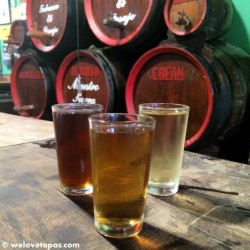
tabancos (10)

Sherry 101

Although there may be other “sherry style” wines, true sherries are those wines, and only those wines, produced in the area around Jerez de la Frontera in southwest Spain, or more specifically, those wines aged in the towns of Jerez, Puerto de Santa Maria, and Sanlúcar de Barrameda under the rules of the Consejo Regulador for the “Denominaciones de Origen” of Jerez and Manzanilla.

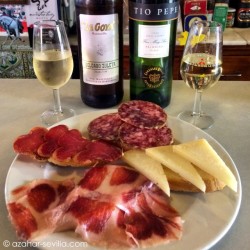
sherry and tapas (1)

We meet a lot of people who associate sherry with that sweet, dark liquid produced for Christmas gatherings by grandmothers and maiden aunts, but there’s a whole world of sherries beyond this, and its aficionados consider it as possibly the world’s most fascinating and underrated wine. So what’s so special about sherry?

Sherries come in a range of styles from light super-dry wines to dense, dark sweet ones. Historically, England has a long connection with sherry (they were highly praised by Shakespeare); English names like Harvey’s and Humbert & Williams feature among the bodegas of Jerez, and the English have been a major consumer of cream sherries in particular. But although there are some excellent wines right across the spectrum, the upsurge of interest in recent years has been in the dry sherries in particular.

saturday sherry

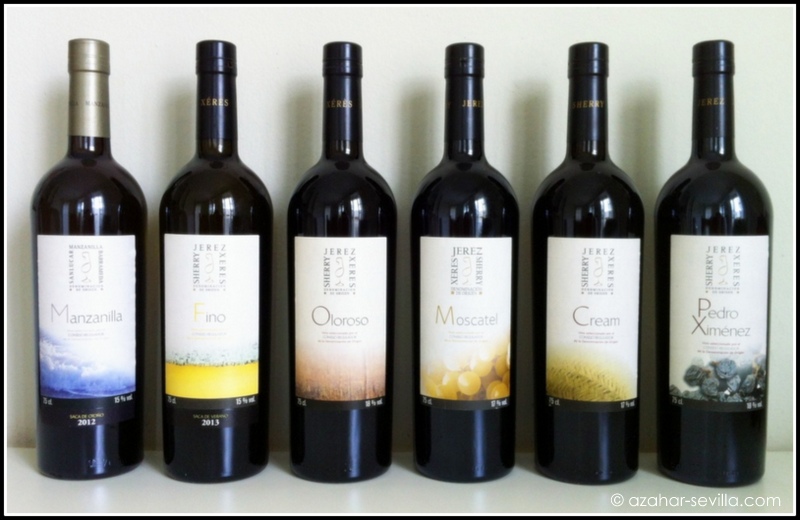
Dry sherries come in two basic styles – those that are biologically aged under a layer of yeast (called flor), and those that are aged oxidatively, or in contact with the air. The former are either Manzanillas (from Sanlucar), or Finos (from Jerez and El Puerto), and the latter are Olorosos (there are some additional twists to the story, but more of that later). All dry sherries are made from the Palomino Fino grape variety (Manzanillas and Finos generally from the first pressing to make a lighter wine, Olorosos from the second for a fuller body; the third pressing is used for grape spirit and vinegar), are fortified (have grape spirit added to increase the level of alcohol), and are aged in a system called a solera.

copa jerez

The wine coming out of fermentation is generally around 12%. It is then raised to an alcohol level of around 15-16%, which helps a vigorous growth of yeast to cover and shield the wine from the air while the yeast consumes the sugars in it (biological aging). Olorosos are fortified to even higher levels, about 17-18%, to prevent the yeast from growing (oxidative aging).

Two of the most highly prized dry sherries are amontillado and palo cortado. Amontillados are initially aged like finos, but after about 3 years extra alcohol is added to kill the yeast, and the sherry is thereafter aged oxidatively, creating a complex and versatile wine. Palo Cortados also start life as finos, but the yeast dies or is killed very early on to create what is, in effect, an oloroso made from the lighter first pressing.

sherry tour (4)

At the other end of the spectrum are the sweet sherries. These are made from the sweeter Pedro Ximenez and Muscat grapes. Good sweet sherries are dark, smooth and rich, often with a flavour of raisins, as the grapes are partially sun-dried before pressing to concentrate the sugar.

Cream sherries are a blend of dry sherry (usually oloroso, but fino based cream sherries are also possible) with sweet wines, either moscatel or PX, and are the style that used to be the most popular in Britain, with something of a boom in the 60s and 70s, when brand names like Harvey’s Bristol Cream and Croft Original were in vogue.

sherry tour

If you’re coming to Spain and have never had sherry this is the time to learn something about this complex and enigmatic wine, and to discover why so many of those involved with sherry get so passionate about it. To have a personalised sherry experience we recommend the Introduction to Sherry tour (with tapas!) offered by Official Sherry Educator Shawn Hennessey of Azahar Sevilla, and featured in Telegraph Travel as one of the Top 10 Food and Drink Holidays in Spain.

 photos courtesy of Azahar Sevilla