Once considered something of a high rise beach holiday city, in recent years Málaga has been bringing itself into the modern age, with pedestrianisation of the old centre, a complete redevelopment of the old harbour, and other projects to attract visitors to what is actually one of Andalucia’s most beautiful and modern destinations.
 You’re here for the food, of course, and there’s a thriving bar and restaurant scene, and the recently renovated Atarazanas Market which now has gourmet food bars alongside its more traditional market stalls. But you can’t spend the whole of your holiday eating and drinking, so you’ll be looking for other things to do between meals. And there’s actually plenty. As well as monuments such as the Alcazaba, Roman Amphitheatre and Cathedral, some beautiful gardens and the Muelle Uno harbour development, all of which you’ll want to visit, Málaga has become a city of museums, which is our subject for today.
Many of the new museums are quite small, but the range of subjects covered is broad and eclectic, from the arts and history, to local culture, and a number of “niche” museums that you probably wouldn’t expect.
At the forefront are a number of important arts museums. Best known of these has to be the Picasso Museum. Pablo Picasso was born in a house on the Plaza Merced (which has another small museum), and it had long been an ambition of the city to have a museum in honour of its most famous son, an ambition finally realized in 2003. The museum can be found in the Palacio de Buenevista, a beautiful 16th century building near the Cathedral. As well as nearly 300 artworks donated by the Picasso family, there are also ruins from Phoenician, Roman and Moorish times in the basement.
Picasso Museum
Palacio de Buenivista
San Agustín, 8
Tel: +34 902 443 377
As well as a number of artworks, the Museo Casa Natal remembers the early life of Picasso, his family and his connections to Malaga.
Casa Natal
Plaza de la Merced, 15
Tel: +34 951 926 060
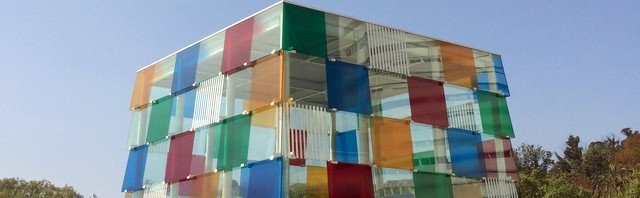
 The recently opened Centre Pompidou Malaga, dedicated to 20th century art, is the first branch of the Pompidou museum to open outside France, and can be found beneath the big glass cube (an obvious reference back to the famous pyramid at the Paris Pompidou) on the corner of Muelle Uno and Muelle Dos in the harbour. There’s a permanent exhibition of around 80 paintings and other works from the parent museum, themed temporary exhibitions and workshops for children and teenagers.
Centro Pompidou Malaga
Muelle Uno
Tel: +34 951 926 200

Other must see art museums are the Carmen Thyssen museum, which has a collection of over 200 paintings focusing on 19th century Spanish painters, and the Contemporary Arts Centre in the Soho neighbourhood, which features art workshops and events alongside its regular exhibitions.
Carmen Thyssen Museum
Compania, 10
Tel: +34 902 303 131

Contemporary Arts Centre
Alemanía s/n
Tel: +34 952 120 055
The Centro Arte Tauromaquia is another Malaga museum that’s widely regarded as the best of its kind – in this case art and memorabilia relating to bullfighting, with 300 pieces from the Juan Barco collection, the biggest and most comprehensive in the world.
Centro Arte Tauromaquia
Plaza del Siglo

Another favourite is the Automobile Museum, and you don’t need to be a car enthusiast to enjoy it. This is one of the world’s most important collections of Vintage and Classic cars, and there’s also an exhibition of the fashions (especially hats) that went with them.
Automobile Museum
The Old Tobacco Factory
Avenida Sor Teresa Prat, 15
Tel: +34 951 137 001
Also in the old tobacco factory is the new Russian Museum, with an exhibition of Russian art from the State Museum in Saint Petersburg that ranges from Byzantine icons to Soviet Realism. This is a fascinating collection that’s well worth making that little extra effort to see.
Russian Museum
The Old Tobacco Factory
Avenida Sor Teresa Prat, 15
Tel: +34 951 926 150
The newly opened Malaga Museum in the 18th century Palacio de la Aduana (Customs House) houses the collections of the former Fine Arts and Archaeological Museums. The exhibitions are well laid out and are a fascinating treasure trove of the history of Malaga. One of the most important museums in Malaga this is a definite must see.
Malaga Museum
Plaza de la Aduana S/N
Tel: +34 951 911 904
Other more specialist museums include those dedicated to glass and crystal (this one is excellent, with the exhibits displayed in domestic settings in a historic palace, with period furniture and other accessories), wine (from the local region, with a history of advertising, and grape-growing and wine-making equipment), music, and popular arts and culture. Also in the pipeline is the full opening of the Aduana Palace, which will house both the Fine Arts Museum and the Archaeology Museum.
Wine Museum
Plaza de los Viñeros, 1
Tel: +34 952 228 493
Popular Arts & Customs
Pasillo de Santa Isabel, 10
Tel +34 952 217 137
Glass & Crystal Museum
Plazuela Santísimo Cristo de la Sangre, 2
Tel: +34 952 220 271
Interactive Music
Beatas, 15
Tel: +34 952 210 440
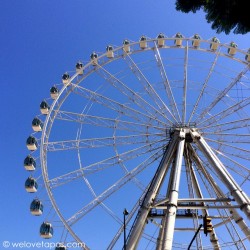
 Seville Wheel
 view from the Seville Wheel
 Malaga Wheel
 view of the Malaga Wheel from Muelle Uno


 Cordoba is the home of salmorejo, the thick tomato soup often served with a garnish of hard boiled egg and jamón, of the flamenquín (rolled pork and cheese fried in a coating of breadcrumbs), and of fried aubergine/eggplant with a dressing of cane sugar molasses. You can also find the biggest tortillas de patatas in the world, available from

 view of Antequera from the Alcazaba
 The Alcazaba was built by the Moors in the 13th century after the Christian kings conquered Cordoba, and finally fell to the future Ferdinand I of Aragon in 1410. It’s well worth a visit, with an excellent audio guide to the castle, and panoramic views of the town and surrounding countryside (look out for the golden angel on top of the San Sebastian church tower). Antequera is also famous for its large number of churches, convents and palaces (it’s sometimes called the city of churches), mostly built in the period of prosperity after the discovery of the New World, and an important museum which you can find in the Nájera Palace in the Coso Viejo.
 breakfast mollete with olive oil, tomato and jamón serrano
 two rings of churros please!
 three types of porra: tomato, blanca and orange