Day Trip to Triana

triana (56)

Typical Triana courtyard

Triana is the neighbourhood of Seville across the river from the old walled city, and is regarded by many Trianeros as a completely separate entity, historically, the home of Gypsies, sailors and other groups from the metaphorical wrong side of the tracks, and it retains something of that atmosphere today, with strong attachments to the cultures of flamenco and bullfighting, together with a certain religious fervour and sentimentality. If you’re in Seville for more than a couple of days and want to get away from the main tourist areas you should take some time to cross “The Bridge” to this near neighbour of the city.

triana (1)

Isabel II bridge

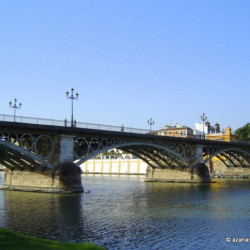
The Bridge is the Isabel II bridge (popularly just called Triana bridge), a wonderful example of mid 19th century iron architecture which replaced the previous “bridge of boats”, built by the Moors in the 12th century. Crossing over you get some fine views along the river, on one side to the old port and the Torre del Oro, with the towers of the Plaza España beyond, as well as the old Moorish dock on the Triana side. In the other direction is the site of the 1992 expo and the Cartuja monastery.

triana (8)

Calle Betis from Plaza Altozano

The square immediately across the bridge, the Plaza Altozano, and the buildings around it, are still the hub of “old” Triana. The Restaurante El Faro on the left, beside the steps going down to Calle Betis, is an unmissable landmark. Much prettier, though, is the Carmen Chapel opposite, designed by Anibal Gonzalez in preparation for the 1929 Spanish American exhibition, with its brickwork and colourful tiles.

Before you begin exploring, grab a little breakfast at Manu Jara, a little French style patisserie on Calle Pureza with a tempting selection of croissants and pastries, as well as the obligatory coffee. Just opposite you can also find the Antigua Abacería, a traditional style pit stop that’s also worth a visit to whet your appetite.

triana (21)

Triana market stall

Then it’s back to the main square for a visit to Triana market, a must see for anyone with an interest in local food culture. With its old ceramic tile nameplates it’s probably the prettiest of Seville’s markets, as well as having all the traditional market produce, from colourful fruit and veg to fresh fish, hams, sausages, game, wonderful cheeses, and olives, beans and spices. There are also a number of market bars, both traditional and “gourmet”, including an oyster and sushi bar, and a microbrewery, which give you a good opportunity for a spot of refreshment and people watching.

triana (29)

Inquisition Alley

Beneath the market is a reminder of the Dark Side of Spain’s past, the Castillo San Jorge. Originally built to guard and defend the bridge of boats, it was for more than three centuries the Seville headquarters of the infamous Spanish Inquisition, and if you were unfortunate enough to be denounced for some real or imaged transgression this was where they brought you. The ruins are now a free museum, and though it’s quite grim (not a cushion or comfy chair to be seen) don’t expect lots of gore and sensationalism – just a reminder of where intolerance leads.

triana (32)

Ceramica Santa Ana

Behind the market is the old ceramics and pottery district. Even in Roman times Triana was famous for its pottery, and the martyred Sevillana saints Justina and Rufina were said to be potters from Triana. In the industrial age it was a major local activity, but now little remains except a few craft workshops, where you can pick up some nice colourful souvenirs. You can get a glimpse of former splendours with a visit to the Santa Ana Ceramics Museum, where you can see some of the old kilns, and examples of the work produced here.

Of course, you’ll be wanting to round off your day in one of Triana’s many busy tapas bars. Some of my favourites include Primero del Puente, a typical fried fish specialist opposite the Torre del Oro, Las Golondrinas on Pages del Corro (try the radishes. Seriously), and Sol y Sombra on Castillo.
Seville Museums

For some people “cultural” stuff like art or historic monuments is what you do between eating and drinking and more eating and drinking. For others, it’s the other way around. But whichever kind of holidaymaker you are, you are likely at some point to find yourself in a museum. Seville has lots of these, covering a wide range of subjects, so this is our handy guide to finding a museum that suits you.

We won’t be delving here into the art collections of places like the Cathedral, the India Archives or Casa Pilatos; we’ll be looking at Museums devoted to fairly specific themes.

museo popular artsMuseum of Popular Arts & Traditions

Seville has two top class art museums. For lovers of classic paintings and sculpture there’s the Bellas Artes (Fine Arts) Museum, featuring mainly Spanish artists from mediaeval times to the early 20th century, such as Murillo, Valdés Leal and Goya, all housed in a splendid 16th century former convent. For fans of modern art the Andalucian Centre of Contemporary Art can be found in the old Cartuja monastery on the Expo ‘92 site across the river. Look for the chimneys of the old pottery kilns.

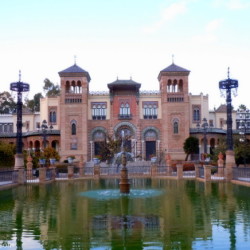
Another group of museums focuses on people’s daily lives, entertainment and culture. The Museum of Popular Arts and Traditions in the Mudejar Pavilion, built in Maria Luisa Park for the 1929 expo, has a recreation of a Sevillano house, and collections of furniture, utensils, clothing, religious objects, ceramics and the like. You can see more ceramics in the setting of one of Triana’s old pottery workshops, including the kilns and the history of pottery and tile making techniques.

flamenco museumMuseo del Baile Flamenco

Two popular entertainments central to Andalucian culture are bullfighting and flamenco, and both have their own dedicated museums. The bullfighting museum can be found at the Real Maestranza bullring, and the guided visit includes not only the museum, but also the arena (arena is Spanish for sand), chapel, pens and other parts of the installations. The Flamenco Dance Museum is the only one of its kind in the world and has an interesting collection of memorabilia and information about flamenco. In the evenings they also have the best Flamenco show in town. Even if you think you’re not interested in flamenco go and see it.

In a city as ancient as Seville it’s only right that there should be a number of museums on the subject of history. Most important is the Archaeological Museum, in the Renaissance Pavilion facing the Popular Arts Museum. It’s most important exhibit is the Carambolo Treasure, comprised of 24 gold items discovered in Camas, near Seville, in 1958, and thought to belong to the Tartessos culture of the 1st millenium BC. The largest collection is of Roman objects, many from Italica, the Roman city in Santiponce, and from other archaeological excavations around Seville. More Roman remains can be found at the Antiquarium, under the iconic Metropol Parasol. There are also smaller museums of the Jewish period and the Moorish legacy, as well as the Inquisition Museum in the Castillo San Jorge.

Some other museums that are worth a visit include the Military Museum (Plaza España), the Naval Museum (Torre del Oro) and the Navigation Pavilion (on the ’92 expo site).

5 Top Museums

Bellas Artes Museum
Plaza del Museo, 9
Tel: +34 955 542 931
Website

Archaeology Museum
Plaza de América, s/n
Tel: +34 955 120 632
Website

Museum of Art and Popular Traditions
Plaza de América s/n
Tel: +34 955 542 951
Website

Andalucian Centre for Contemporary Art
Monasterio de La Cartuja, Avenida Américo Vespucci, 2
Tel: +34 955 037 072
Website

Flamenco Dance Museum
Manuel Rojas Marcos, 3
Tel: +34 954 340 311
Website

Málaga | City of Museums

Once considered something of a high rise beach holiday city, in recent years Málaga has been bringing itself into the modern age, with pedestrianisation of the old centre, a complete redevelopment of the old harbour, and other projects to attract visitors to what is actually one of Andalucia’s most beautiful and modern destinations.

malaga museums (1) You’re here for the food, of course, and there’s a thriving bar and restaurant scene, and the recently renovated Atarazanas Market which now has gourmet food bars alongside its more traditional market stalls. But you can’t spend the whole of your holiday eating and drinking, so you’ll be looking for other things to do between meals. And there’s actually plenty. As well as monuments such as the Alcazaba, Roman Amphitheatre and Cathedral, some beautiful gardens and the Muelle Uno harbour development, all of which you’ll want to visit, Málaga has become a city of museums, which is our subject for today.

Many of the new museums are quite small, but the range of subjects covered is broad and eclectic, from the arts and history, to local culture, and a number of “niche” museums that you probably wouldn’t expect.

At the forefront are a number of important arts museums. Best known of these has to be the Picasso Museum. Pablo Picasso was born in a house on the Plaza Merced (which has another small museum), and it had long been an ambition of the city to have a museum in honour of its most famous son, an ambition finally realized in 2003. The museum can be found in the Palacio de Buenevista, a beautiful 16th century building near the Cathedral. As well as nearly 300 artworks donated by the Picasso family, there are also ruins from Phoenician, Roman and Moorish times in the basement.

Picasso Museum
Palacio de Buenivista
San Agustín, 8
Tel: +34 902 443 377

As well as a number of artworks, the Museo Casa Natal remembers the early life of Picasso, his family and his connections to Malaga.

Casa Natal
Plaza de la Merced, 15
Tel: +34 951 926 060

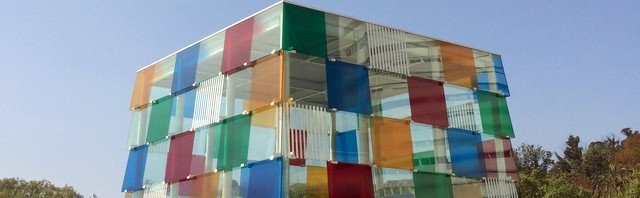
malaga museums (2)The recently opened Centre Pompidou Malaga, dedicated to 20th century art, is the first branch of the Pompidou museum to open outside France, and can be found beneath the big glass cube (an obvious reference back to the famous pyramid at the Paris Pompidou) on the corner of Muelle Uno and Muelle Dos in the harbour. There’s a permanent exhibition of around 80 paintings and other works from the parent museum, themed temporary exhibitions and workshops for children and teenagers.

Centro Pompidou Malaga
Muelle Uno
Tel: +34 951 926 200

malaga museums (8)

Other must see art museums are the Carmen Thyssen museum, which has a collection of over 200 paintings focusing on 19th century Spanish painters, and the Contemporary Arts Centre in the Soho neighbourhood, which features art workshops and events alongside its regular exhibitions.

Carmen Thyssen Museum
Compania, 10
Tel: +34 902 303 131

malaga museums

Contemporary Arts Centre
Alemanía s/n
Tel: +34 952 120 055

The Centro Arte Tauromaquia is another Malaga museum that’s widely regarded as the best of its kind – in this case art and memorabilia relating to bullfighting, with 300 pieces from the Juan Barco collection, the biggest and most comprehensive in the world.

Centro Arte Tauromaquia
Plaza del Siglo

malaga museums (6)

Another favourite is the Automobile Museum, and you don’t need to be a car enthusiast to enjoy it. This is one of the world’s most important collections of Vintage and Classic cars, and there’s also an exhibition of the fashions (especially hats) that went with them.

Automobile Museum
The Old Tobacco Factory
Avenida Sor Teresa Prat, 15
Tel: +34 951 137 001

Also in the old tobacco factory is the new Russian Museum, with an exhibition of Russian art from the State Museum in Saint Petersburg that ranges from Byzantine icons to Soviet Realism. This is a fascinating collection that’s well worth making that little extra effort to see.

Russian Museum
The Old Tobacco Factory
Avenida Sor Teresa Prat, 15
Tel: +34 951 926 150

The newly opened Malaga Museum in the 18th century Palacio de la Aduana (Customs House) houses the collections of the former Fine Arts and Archaeological Museums. The exhibitions are well laid out and are a fascinating treasure trove of the history of Malaga. One of the most important museums in Malaga this is a definite must see.

Malaga Museum
Plaza de la Aduana S/N
Tel: +34 951 911 904

Other more specialist museums include those dedicated to glass and crystal (this one is excellent, with the exhibits displayed in domestic settings in a historic palace, with period furniture and other accessories), wine (from the local region, with a history of advertising, and grape-growing and wine-making equipment), music, and popular arts and culture. Also in the pipeline is the full opening of the Aduana Palace, which will house both the Fine Arts Museum and the Archaeology Museum.

Wine Museum
Plaza de los Viñeros, 1
Tel: +34 952 228 493

Popular Arts & Customs
Pasillo de Santa Isabel, 10
Tel +34 952 217 137

Glass & Crystal Museum
Plazuela Santísimo Cristo de la Sangre, 2
Tel: +34 952 220 271

Interactive Music
Beatas, 15
Tel: +34 952 210 440