For some people “cultural” stuff like art or historic monuments is what you do between eating and drinking and more eating and drinking. For others, it’s the other way around. But whichever kind of holidaymaker you are, you are likely at some point to find yourself in a museum. Seville has lots of these, covering a wide range of subjects, so this is our handy guide to finding a museum that suits you.
We won’t be delving here into the art collections of places like the Cathedral, the India Archives or Casa Pilatos; we’ll be looking at Museums devoted to fairly specific themes.
 Museum of Popular Arts & Traditions
Seville has two top class art museums. For lovers of classic paintings and sculpture there’s the Bellas Artes (Fine Arts) Museum, featuring mainly Spanish artists from mediaeval times to the early 20th century, such as Murillo, Valdés Leal and Goya, all housed in a splendid 16th century former convent. For fans of modern art the Andalucian Centre of Contemporary Art can be found in the old Cartuja monastery on the Expo ‘92 site across the river. Look for the chimneys of the old pottery kilns.
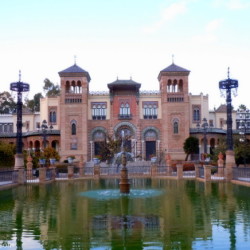
Another group of museums focuses on people’s daily lives, entertainment and culture. The Museum of Popular Arts and Traditions in the Mudejar Pavilion, built in Maria Luisa Park for the 1929 expo, has a recreation of a Sevillano house, and collections of furniture, utensils, clothing, religious objects, ceramics and the like. You can see more ceramics in the setting of one of Triana’s old pottery workshops, including the kilns and the history of pottery and tile making techniques.
 Museo del Baile Flamenco
Two popular entertainments central to Andalucian culture are bullfighting and flamenco, and both have their own dedicated museums. The bullfighting museum can be found at the Real Maestranza bullring, and the guided visit includes not only the museum, but also the arena (arena is Spanish for sand), chapel, pens and other parts of the installations. The Flamenco Dance Museum is the only one of its kind in the world and has an interesting collection of memorabilia and information about flamenco. In the evenings they also have the best Flamenco show in town. Even if you think you’re not interested in flamenco go and see it.
In a city as ancient as Seville it’s only right that there should be a number of museums on the subject of history. Most important is the Archaeological Museum, in the Renaissance Pavilion facing the Popular Arts Museum. It’s most important exhibit is the Carambolo Treasure, comprised of 24 gold items discovered in Camas, near Seville, in 1958, and thought to belong to the Tartessos culture of the 1st millenium BC. The largest collection is of Roman objects, many from Italica, the Roman city in Santiponce, and from other archaeological excavations around Seville. More Roman remains can be found at the Antiquarium, under the iconic Metropol Parasol. There are also smaller museums of the Jewish period and the Moorish legacy, as well as the Inquisition Museum in the Castillo San Jorge.
Some other museums that are worth a visit include the Military Museum (Plaza España), the Naval Museum (Torre del Oro) and the Navigation Pavilion (on the ’92 expo site).
5 Top Museums
Bellas Artes Museum
Plaza del Museo, 9
Tel: +34 955 542 931
Website
Archaeology Museum
Plaza de América, s/n
Tel: +34 955 120 632
Website
Museum of Art and Popular Traditions
Plaza de América s/n
Tel: +34 955 542 951
Website
Andalucian Centre for Contemporary Art
Monasterio de La Cartuja, Avenida Américo Vespucci, 2
Tel: +34 955 037 072
Website
Flamenco Dance Museum
Manuel Rojas Marcos, 3
Tel: +34 954 340 311
Website
 You’re here for the food, of course, and there’s a thriving bar and restaurant scene, and the recently renovated Atarazanas Market which now has gourmet food bars alongside its more traditional market stalls. But you can’t spend the whole of your holiday eating and drinking, so you’ll be looking for other things to do between meals. And there’s actually plenty. As well as monuments such as the Alcazaba, Roman Amphitheatre and Cathedral, some beautiful gardens and the Muelle Uno harbour development, all of which you’ll want to visit, Málaga has become a city of museums, which is our subject for today.
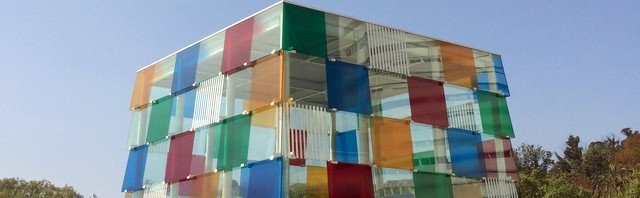
 The recently opened Centre Pompidou Malaga, dedicated to 20th century art, is the first branch of the

