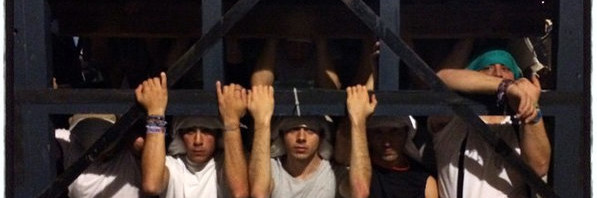
You may think you know something about religious festivals and festivities, but trust us, unless you’ve been to Sevilla for Semana Santa (Holy Week) there’s a definite gap in your education. Although Holy Week is an important festival throughout the Catholic world, the celebrations in Sevilla are thought to be the largest and most elaborate.
The basic format doesn’t sound too complicated. The celebrations are organised by an association of religious brotherhoods (with the co-operation of the City Council), each of which is directly responsible for one of the processions (there are around 40 of these during the course of the week) that carry the statues of the Christ and the Virgin from where they normally “live” to the Cathedral to be blessed, and then return them. The actual mechanics can get complicated, of course, and between the processions and the onlookers a large part of the city, but especially along the processional way and around the Cathedral, is pretty much closed for normal business.
 35 costaleros carry the weight of the pasos on the backs of their necks
So far so good, but this is where it starts to get a bit weird if you don’t know what’s going on. For a start those floats with the statues are heavy, and also valuable (in most cases very valuable), and they have to be moved purely by manpower, often through narrow streets and around tight corners. The manpower is those guys with the rolled up towels on their heads (actually purpose built headgear) to protect them from the weight of the float. They’re called costaleros, and for a couple of months beforehand they can be found practising their routes with floats weighted with sandbags and concrete blocks.
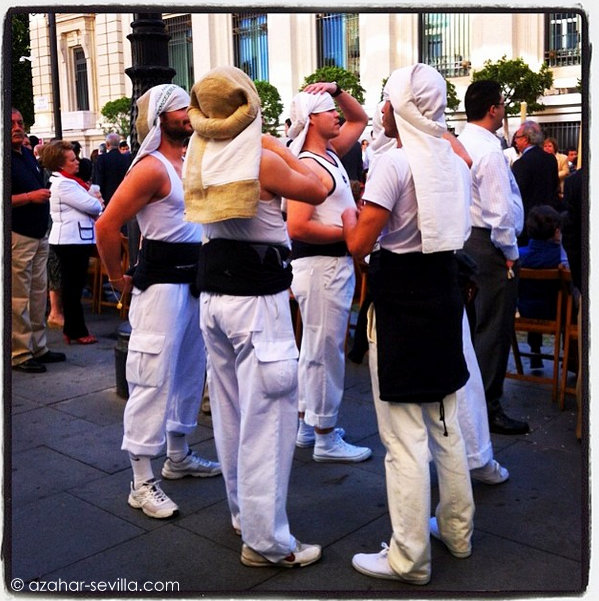 special headgear for carrying the pasos
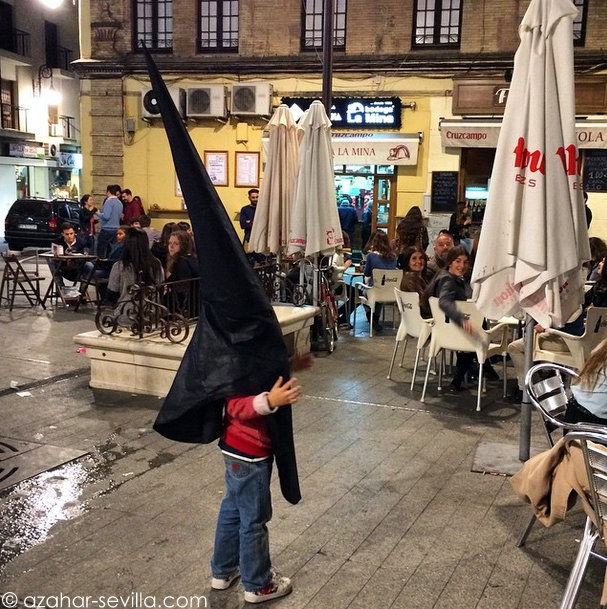
Even odder for the uninitiated are the penitents who accompany the statues. You hardly need us to tell you what most people’s first impression is when they first see them. The pointy hoods serve the same purpose in both cases, though; they preserve the wearer’s anonymity.

But despite the solemnity of the occasion Holy Week and the period of preparation leading up to it has its moments of humour. Some of our favourites are recorded here, from the boy in an adult’s hood to the cigarette smoking penitent (his world weary expression is priceless), and from the “stormtroopers” to the dangers of driving on wax coated streets, but you’re sure to find plenty of your own too.
 incense burners
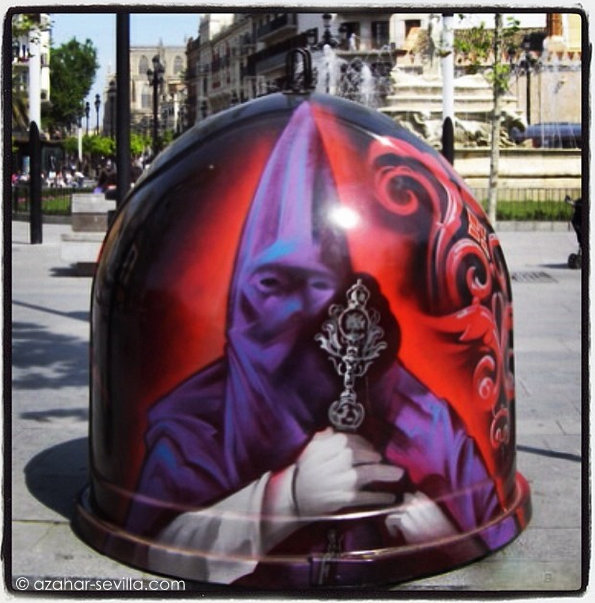 semana santa bottle recycle bin
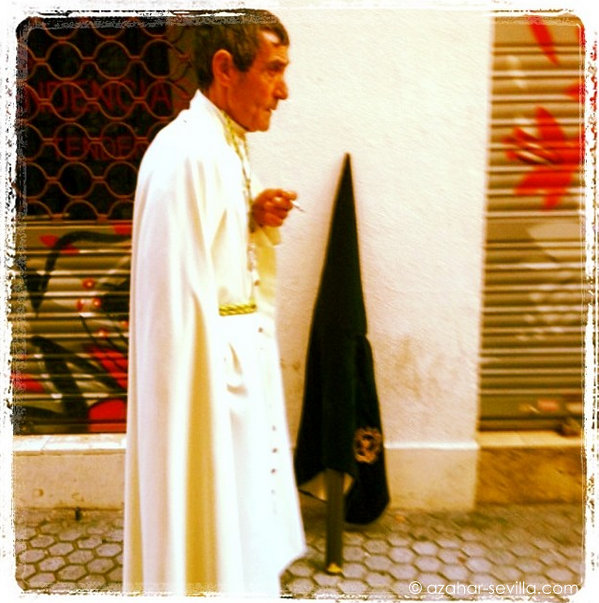 smoke break
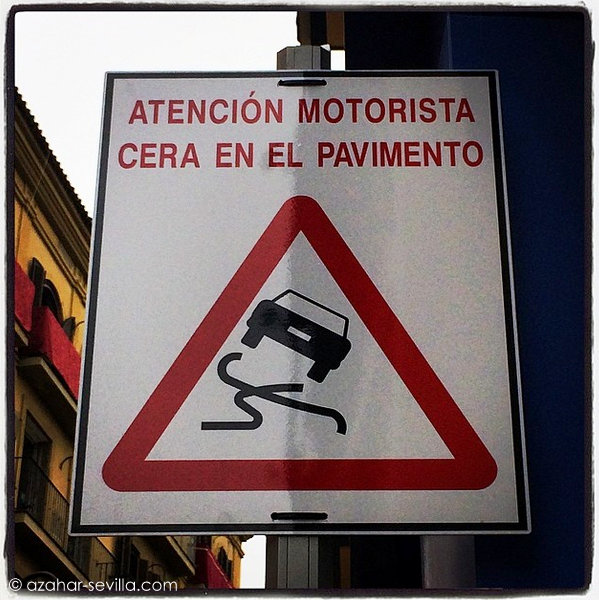 slippery when waxy
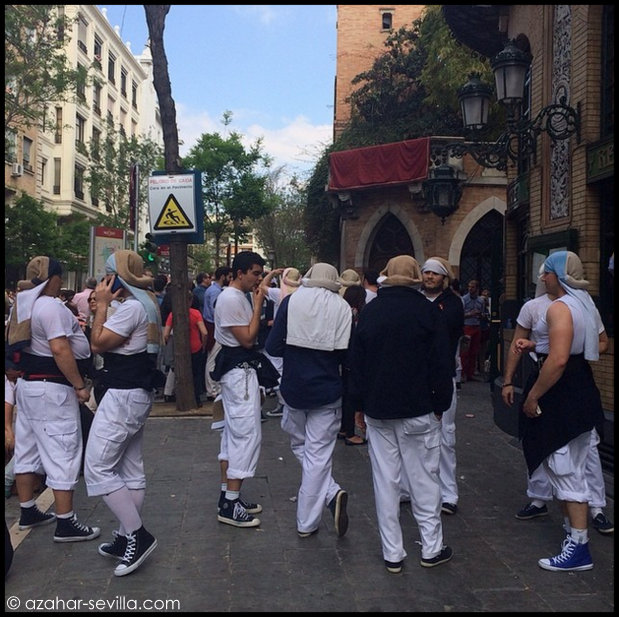 costaleros taking a break (notice pedestrian slippery when waxy sign)
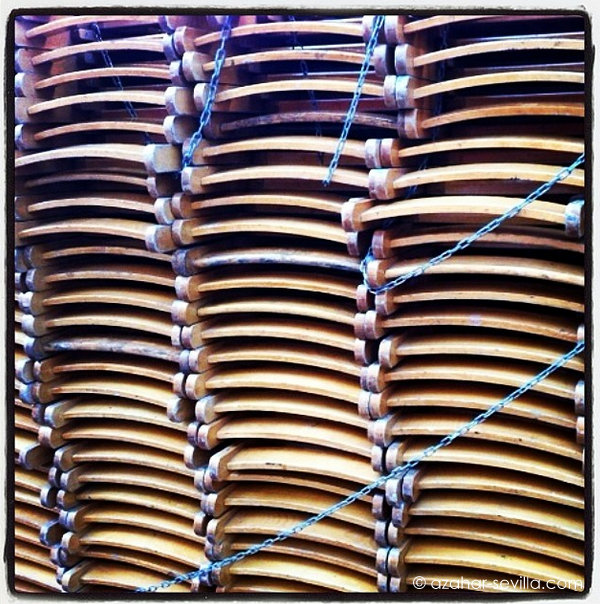 stacked chairs along the procession routes
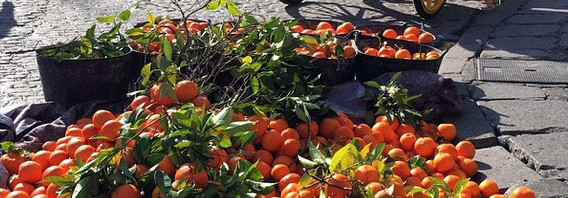
 oranges being harvested in Sevilla